


Will AI Replace Recruiters? - A Facts Based Analysis
Read Time
10 minutes
Updated On
July 29, 2026
.jpeg)


Right now, the job search world feels like it's teetering on an odd edge. With machines learning quicker than ever, smart tools can sort through applications, ask basic interview questions, then suggest who might fit a role - all without human hands. Instead of long waits, some firms get replies in hours, notice fewer unfair leans in picks, while spending less on mass hirings that once overwhelmed teams.
Deep down, past the flashy tech upgrades, there's a quiet worry nagging at people in hiring roles - could this be the beginning of the end for human-led recruitment? Truth is, it’s harder to pin down than most assume. Some find themselves asking if artificial intelligence will take over entirely or just slip quietly into the background, doing the heavy lifting without stealing the spotlight.
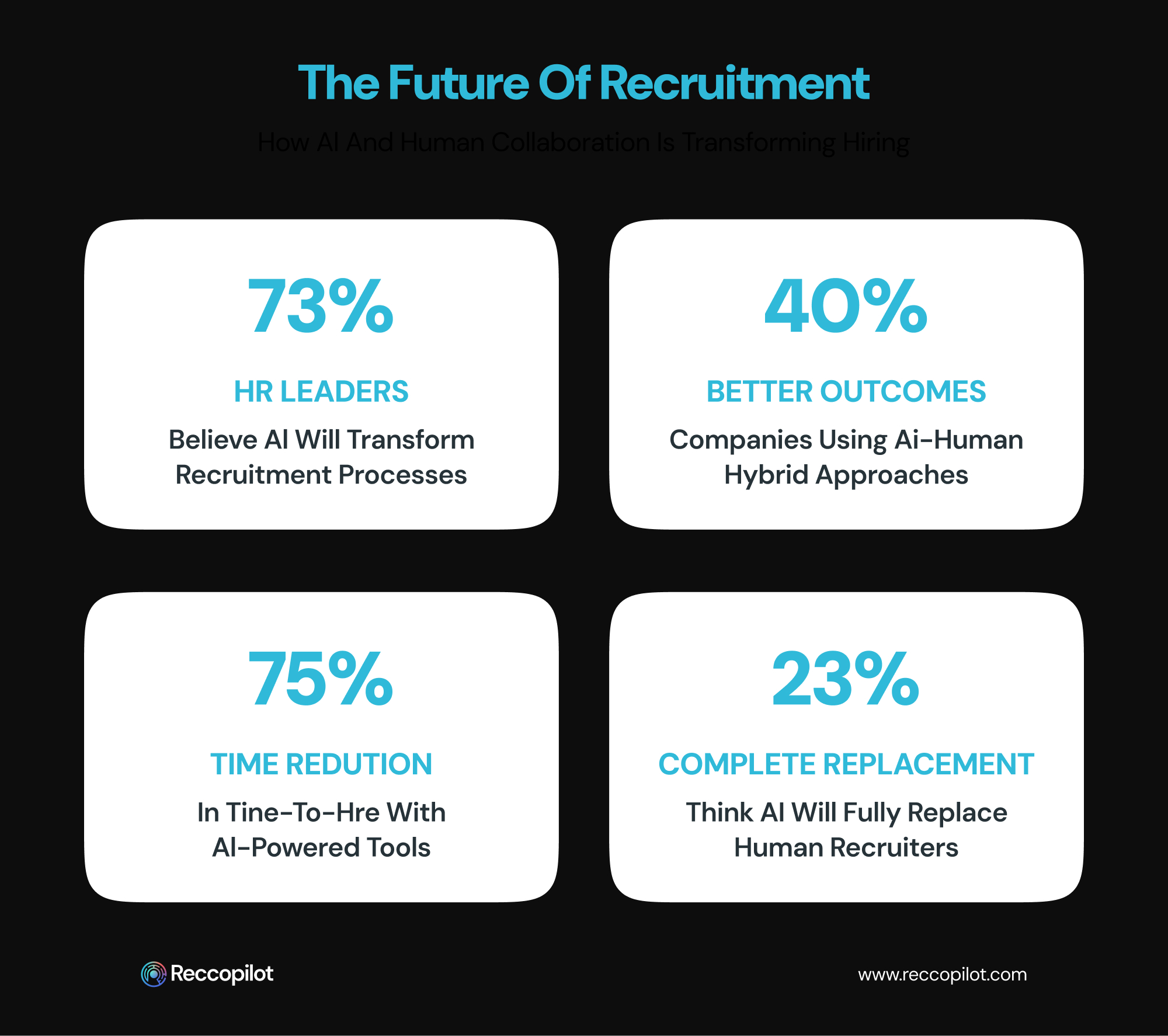
Out of nowhere, machines now sort piles of job forms fast, like within minutes. Some pick out strong applicants using rules set ahead of time. A few even chat a little with people applying. Firms are starting to lean on these smart systems more each day. One reason? Hires happen way quicker, some say nearly three quarters faster than before.
Still, hiring people has never just been numbers or rules, it's gut feeling, reading between lines, spotting something special even when it doesn’t shout. Machines sort facts fast, spot trends hidden in piles of info, yet struggle with unspoken vibes - how someone clicks with a team, their quiet confidence, odd habits that somehow work. Can software feel those things, really? Might machines take over interviews and decisions completely - or do humans stay in the game, changing how they help instead?
One might wonder if machines could ever take over hiring fully. Yet another view sees smart systems working alongside people, not taking their place. Some argue these tools boost what humans can do instead of swapping roles completely. A shift appears in how teams handle recruitment today. Not every task fits automation neatly. People still bring something unique to candidate conversations. Technology changes the workflow, but not always the outcome. What once required hours now takes minutes, though judgment remains personal. The role of the recruiter may transform more than vanish. Machines assist, suggest, speed up - yet decisions often stay with humans. New methods mix old instincts with digital precision. Hiring evolves without erasing its core need for connection.
This question cuts straight to the core of hiring. Matching talent to roles - sure - but is that truly enough? What about sensing how someone might fit within a team, noticing unspoken patterns in their past work, or relying on gut feelings shaped by countless interviews over time?
One step further, this query nudges at more than just hiring firms. Should artificial intelligence take over roles now handled by people in talent search, where else might it slip in next? Picture doctors, teachers, even therapists - could those connections hold up without a person nearby? Speed and scale start winning, yet something soft gets lost when screens swap for handshakes. What once relied on gut feel and shared glances now runs on data streams. Still, warmth matters, especially when choices shape lives. Efficiency hums forward, but silence grows where voices used to meet.
Some folks in the field still can’t agree on this key issue. Microsoft says most HR decision makers - 73% think artificial intelligence will improve how we work.
.jpg)
By 2025, artificial intelligence handles one out of every 5 hires - so recruiters need to understand its role. Jason Lauritsen, who studies future work trends, says smart machines are reshaping how we bring people into jobs. Yet top companies aren’t replacing humans; instead, they let software manage repetitive steps. That frees up talent scouts to spend time talking with applicants, building trust, listening closely. Machines sort resumes, but people still shape the feel of joining a team. Even with tech everywhere, real connection matters just as much.
Outcomes improve when teams mix AI tools with people making hires, according to findings published by Harvard Business Review. Working together seems to beat going all-in on machines or humans alone.
Most specialists agree artificial intelligence will reshape hiring processes in big ways. Still, people skills matter too much to remove entirely. Trust grows through personal contact, not algorithms. Reading between the lines of a candidate’s background takes insight machines lack. Decisions tied to team fit or long-term goals need more than data points - they need judgment shaped by experience.
Looking at the facts, given what machines can do today along with their limits - turns out AI agents fall short of replacing people who hire others. Machines help, yet hiring needs humans, judgment, understanding. Clear outcome? Tech supports but never substitutes the real thing.
It clicks when you see how it fits together. Power shows up in these AI helpers - they move through oceans of information, spot what matters, then handle repeated jobs without slowing down. Speed becomes real during hiring: scanning job applications quicker than people ever could, setting up meetings on their own, sometimes asking starter questions too. Value sneaks in quietly because of all this - support like that changes what teams can do today.
Still, hiring revolves around people at its core. Not just processes, but real connections shape how choices unfold. Judgment comes from feeling, instinct, culture - things machines struggle to grasp fully. Even with smart tools available, gaps remain where humans must step in. Questions linger about roles shifting: Will artificial systems take over? Or will those who hire simply grow stronger using new tech beside them?
One day soon, machines won’t take jobs, they’ll share them. When smart software handles sorting resumes fast, people step in where feelings matter - like reading between lines during interviews. Instead of racing ahead alone, tools and talent slow down together at key moments. Speed comes from circuits, judgment from experience. Decisions grow sharper when logic meets instinct mid-process. What clicks isn’t just match rates - it’s trust forming across screens and handshakes.
Smart companies are already moving in this direction, using AI-powered recruitment platforms to handle routine tasks while empowering their human recruiters to focus on what they do best: building relationships and making strategic hiring decisions.
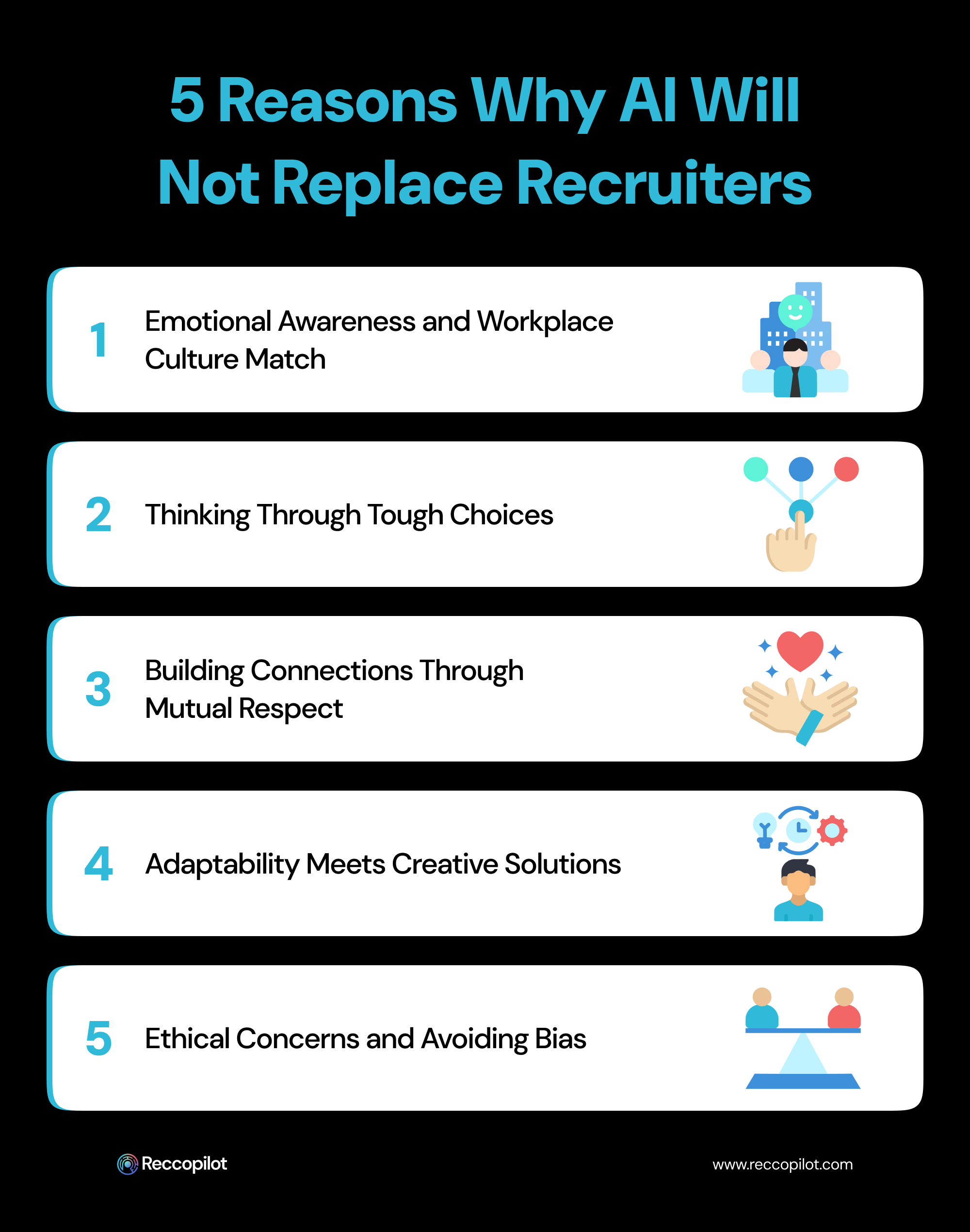
Most times, emotion slips past artificial intelligence when it comes to job candidates. A real person notices pauses, shifts in tone, even small gestures during talk. Where machines miss context, humans catch whether someone fits naturally into a group. Gut feeling plays a role too - something software does not have. Reading between lines happens easier face-to-face than through cod.
Most hiring choices happen without all facts lined up neatly. Picking a person short on one crucial talent yet full of promise - how does that sit with you? Energy versus background - where do you place your trust there? Reading between those lines takes more than rules; it needs instinct, years in the field, seeing past what code might suggest.

Most top recruiters grow connections slowly, sticking around well beyond just filling roles. Not only do they learn what people want in their work lives, but also how teams truly operate behind closed doors. Matching someone to a job isn’t about data alone - people need trust, real conversations, sometimes even silence. Machines might sort resumes fast, yet they miss tones, hesitations, unspoken tensions. So when wondering if artificial intelligence will take over recruiting completely, think again - it’s more layers than it first appears.
A single moment of hiring always shows up different than before. Yet skilled recruiters adjust, their rhythm shaped by whatever unfolds nearby. Perhaps they search where others don’t look, or describe roles using new words, or move through doubt like weather. Finding paths with creativity - only people carry that. The ability to bend isn’t stored in code.
Even if technology reduces certain biases, it can still echo past errors unless watched carefully. Human oversight remains key during hiring, noticing strange outputs from programs, intervening at the right moment. Close observation shapes fairness, questioning automated recommendations that seem off, maintaining individual discretion instead of relying solely on algorithms.
Truth is, when AI takes part in hiring, nothing gets simpler - hiring stays messy. Speed comes easily with machines, still, something slips through: the human touch in choosing who fits best. Software moves tasks forward, yet lacks instinct, care, reading between lines. Resumes get processed quick by code, connection? That remains out of reach. Yet here it slows, held by boundaries unseen. Smarts arrive through lines of code, though feeling only grows where people reach.
Forward motion favors teams mixing clever software with actual humans. Machines take on relentless calculations, yet judgment in staffing stays human-led. This blend unfolds naturally, not pushed. Flowing easily between digital pace and individual awareness sets some apart - keeping key talent tends to follow.
Most of the time, fast hiring leans on tools that move quick. Yet decisions? Those land better when someone with years behind them weighs in. Pairing software with seasoned eyes lifts quality, somehow keeps things human too. What code misses, a person spots - like hesitation in a voice or purpose behind a career shift. Outcomes tighten, sure, but so does meaning. Work gets done faster, though never at the cost of knowing why it matters.
A single goal rises, support hiring teams instead of replacing them. With tools lending support, people find room to talk deeply, build relationships, influence decisions. This change alters the path hiring takes. The future? A place where intelligent tech walks alongside human insight, both mattering just the same.




