


Effectiveness of Resume Databases for Finding Job Candidates
Read Time
7 Minutes
Updated On
April 21, 2026
.jpeg)


A recruiting manager told us she'd been manually saving resumes in folders on her computer for three years. Hundreds of great candidates she'd interviewed but didn't hire. All sitting unused in random folders.
"I know there's gold in there," she said. "But I can never find anyone when I need them. By the time I dig through files, the role is already filled."
Sound familiar? If you're a recruiter, you've probably been there. You interview amazing people who aren't quite right for the current role. You tell yourself you'll reach out when something better opens up. Then months pass and you forget they exist.
This is exactly why resume databases exist. They're not just storage. They're searchable, organized systems that turn your past candidates into future hires. When used right, they cut your sourcing time in half and fill roles with people you already vetted.
This blog breaks down the real effectiveness of resume databases for finding job candidates. What works, what doesn't, and how to actually use these tools to hire faster without constantly sourcing new people.
A resume database is a searchable collection of candidate resumes and profiles stored in one organized system. Think of it as your personal talent library that you can search whenever you have an opening.
Unlike random folders or scattered spreadsheets, a proper candidate resume database lets you search by skills, experience, location, job titles, education, and basically any criteria that matters for your roles. You type "software engineer Python remote" and instantly see every relevant candidate you've ever interacted with.
The value is simple. You've already spent time and money attracting these candidates. You've screened them, interviewed them, or at minimum reviewed their qualifications. That work shouldn't disappear just because they weren't hired for one specific role. A resume database preserves that investment and lets you use it again.
Understanding the practical benefits helps you see why investing time in a resume database pays off. These aren't just nice to have features but real advantages that impact your daily recruiting work and overall hiring success. Below are the key ways resume databases make your job easier and more effective.

When a role opens, you search your database first before posting jobs or calling agencies. If you find qualified candidates already in your system, you can reach out immediately instead of waiting weeks for new applications. We've seen roles filled in days instead of weeks simply by searching existing databases first.
Every candidate in your database represents money already spent on job ads, sourcing tools, or recruiter time. Using them again costs nothing extra. Compare this to posting new jobs, paying for ads, or hiring agencies. Database candidates are essentially free to source.
People in your resume database aren't random. They applied to your company before or you sourced them intentionally. They've been screened or interviewed. You have actual data about their qualifications. This beats cold sourcing strangers every time.
When you reach out to someone from your database months after they first applied, they remember you. They feel valued that you kept them in mind. This builds goodwill and increases acceptance rates when you extend offers.
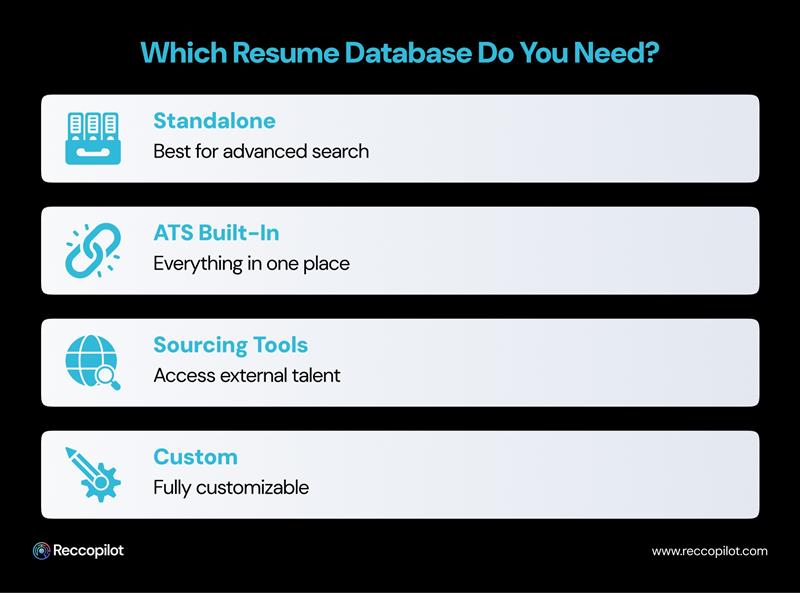
Not all resume databases work the same way. Understanding different types helps you choose what fits your needs.
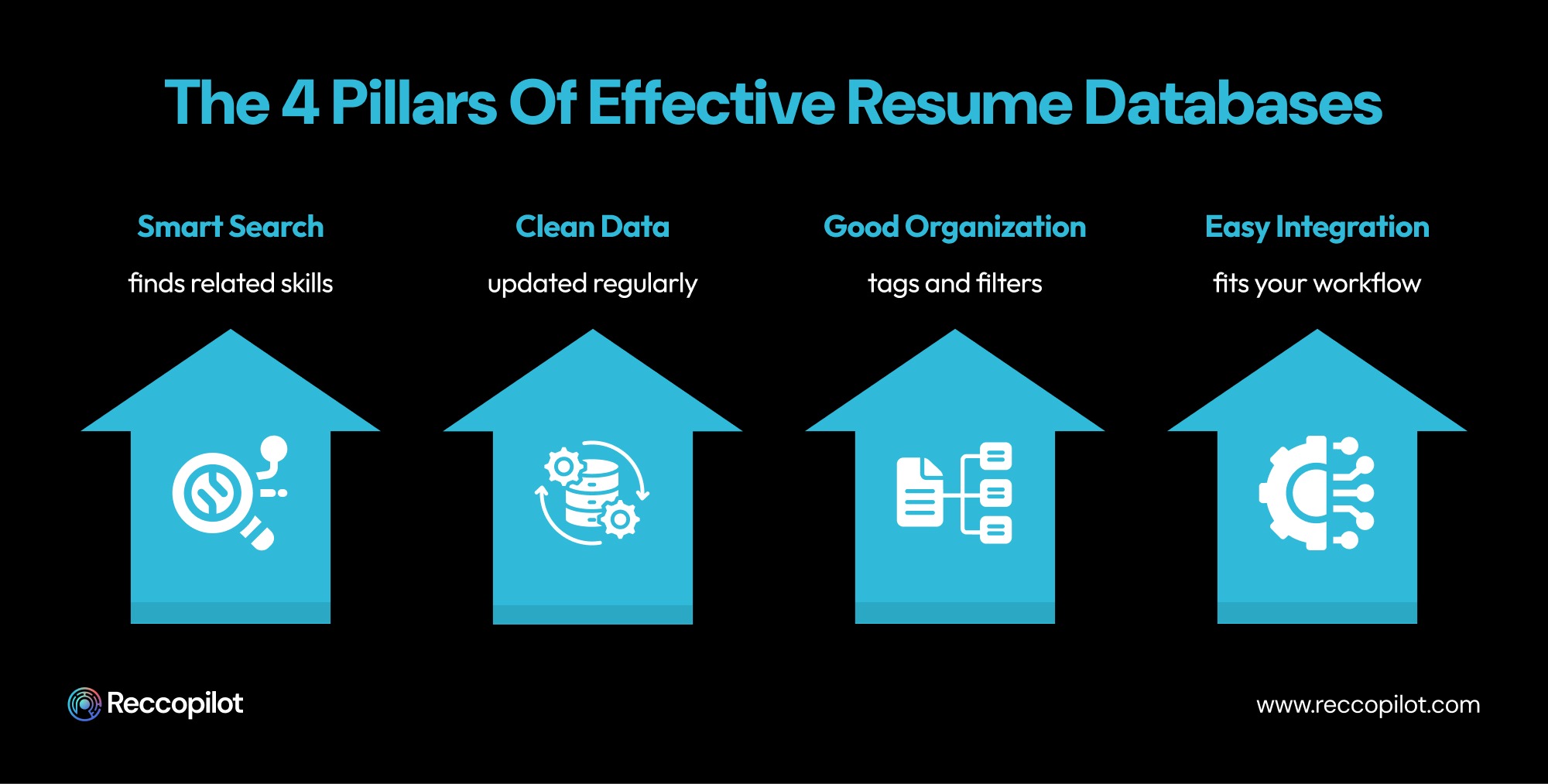
Having a database means nothing if you can't find the right people when you need them. Effectiveness comes down to specific factors that separate useful databases from useless ones.
Even the best resume database software fails to deliver results when certain critical problems aren't addressed. These issues plague most recruiting teams and directly impact whether your database becomes a valuable asset or an ignored tool sitting unused. Below are the most common problems that prevent recruiters from getting value from their candidate databases.
Resumes get added but never updated. Contact information goes stale. People get new jobs or new skills but your database still shows their old information. Searching returns outdated results. Over time, the database becomes less useful until recruiters stop checking it entirely.
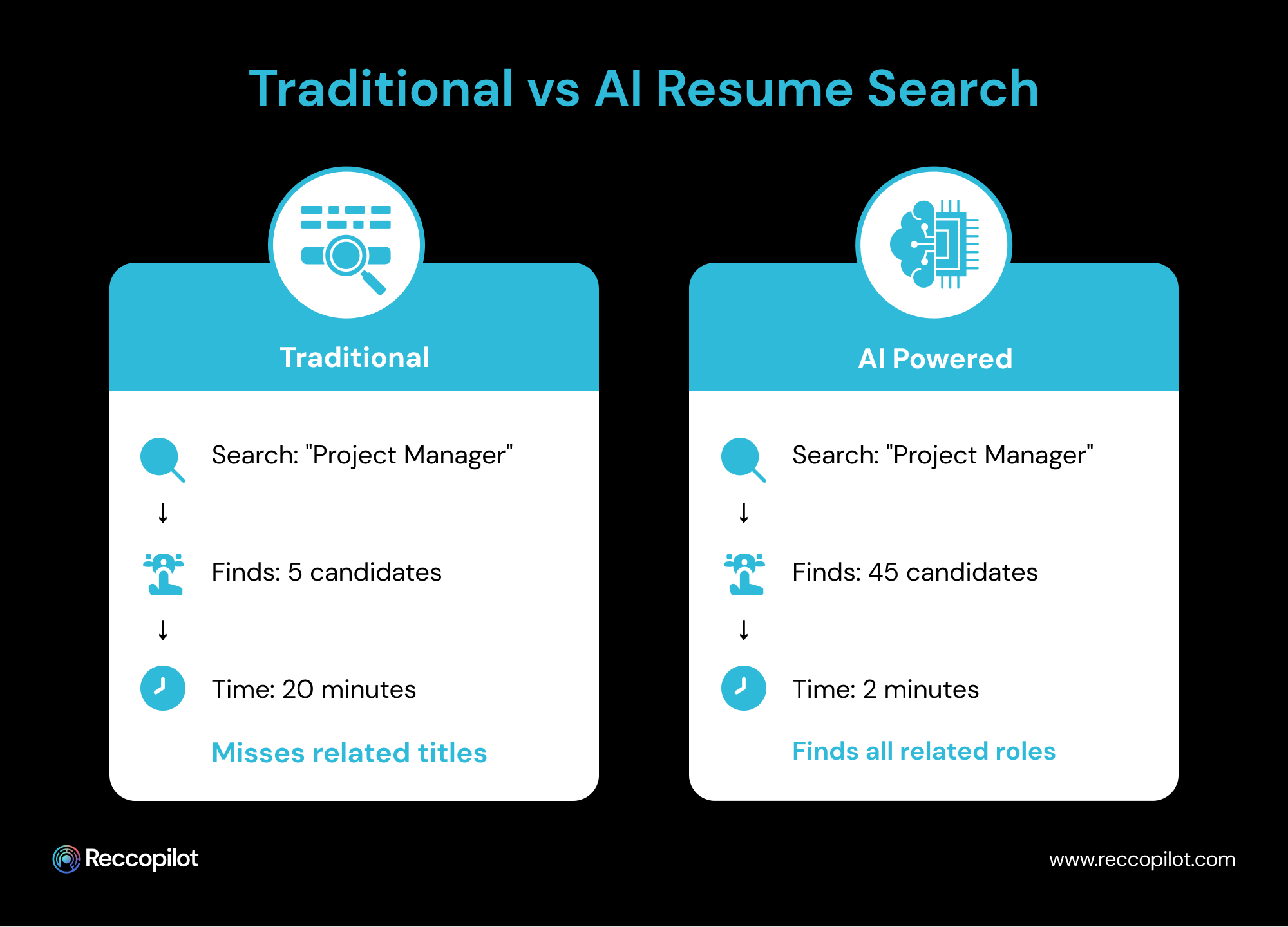
You search for skills but only get exact keyword matches. Someone has the experience you need but used slightly different terminology on their resume, so they don't appear. Weak search means missing qualified candidates who are actually in your system.
Every spam application and unqualified resume gets saved forever. Your database becomes polluted with thousands of irrelevant profiles. Finding good candidates becomes like finding needles in haystacks. Quality matters more than quantity in resume databases.
This is the biggest problem. You have a database but recruiters forget to search it before posting jobs or sourcing externally. The database exists but doesn't get used. Without making database searches mandatory first steps, you won't realize any benefits.
Artificial intelligence is making resume databases dramatically more effective by solving their traditional limitations. Modern AI powered systems don't just store resumes, they understand them.
Want to see how AI can make your resume database actually useful? Reccopilot offers a free trial so you can test these capabilities with your actual candidate data.

If you have a resume database that isn't delivering results, here's how to fix it.
Resume databases work when they're maintained, searchable, and actually used. The effectiveness of resume databases for finding job candidates isn't theoretical. We see recruiting teams fill 30 to 40% of roles from their existing databases when they commit to using them properly.
The best candidates aren't always the ones applying right now. Sometimes they're people who applied six months ago for a different role, or candidates you sourced last year who weren't ready to move then. Your resume database captures all that effort so it compounds over time instead of disappearing.
Every recruiter should be building and using a candidate resume database. The question isn't whether it's worth it. It's whether you'll actually maintain and search it consistently. Do that and your time to fill drops, your cost per hire falls, and you stop starting from zero every single time you have an opening.




