


How To Maintain Candidate Engagement In High-Volume Hiring Campaigns
Read Time
7 Minutes
Updated On
April 21, 2026
.jpeg)


We watched a retail company lose their perfect candidate last month. They were hiring 200 seasonal workers and had over 1,000 applications. This candidate had great experience, passed initial screening, and was excited about the role.
Then silence. For three weeks.
By the time the recruiter finally reached out, the candidate had already accepted another offer. "I figured you weren't interested," they said. "The other company responded in two days."
We see this constantly. Companies attract tons of applicants, then lose the best candidates simply because they can't keep them engaged during the process. High volume hiring is tough. When you're processing hundreds of applications, keeping every candidate engaged feels impossible.
This blog shows you exactly how to maintain candidate engagement in high volume hiring campaigns. Practical steps you can implement this week to stop losing great candidates to silence and slow processes.
Candidate engagement is how interested and involved candidates stay throughout your hiring process.
In small scale hiring, this is easy. You're hiring one person. You can send personal emails and keep them updated. High volume hiring is different. You're hiring 50, 100, or 500 people at once. You can't give everyone personal attention. But candidates don't know that.
Engaged candidates respond quickly, show up for interviews, and accept offers. Disengaged candidates ghost you, drop out, and accept other jobs. In high volume campaigns, maintaining engagement determines whether you actually fill roles or start over because everyone disappeared.
High-volume hiring creates pressure points that don’t exist in smaller recruitment efforts. When teams are handling hundreds of applications at once, small delays and gaps quickly add up and candidates start losing interest. These are the most common reasons candidate engagement breaks down at scale.
Here’s a quick visual breakdown of why candidates disengage at scale.
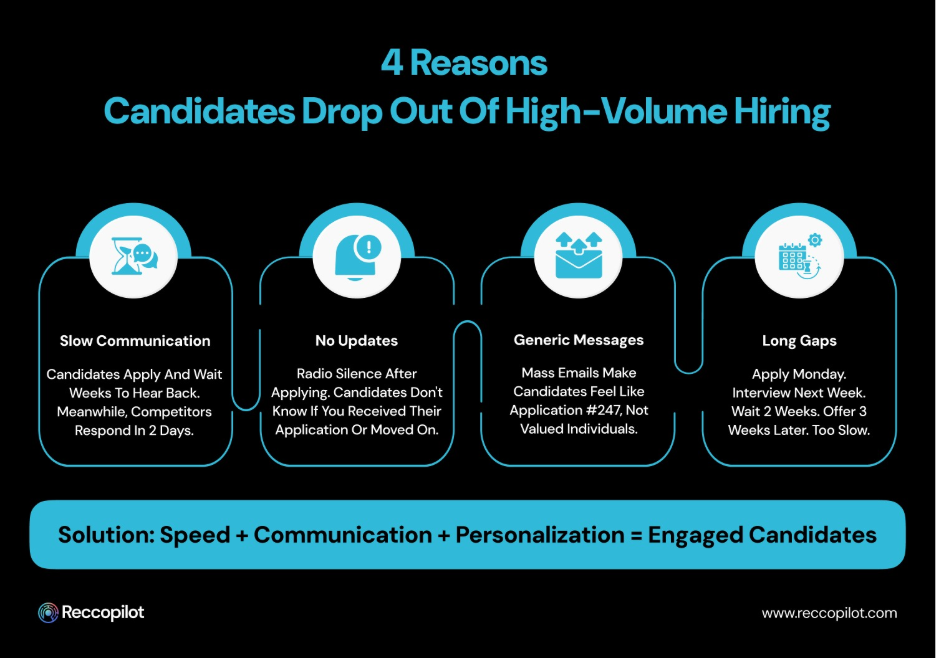
When processing 500 applications, it takes time to review everyone. Candidates apply Monday, you reach out next Monday. They've already interviewed elsewhere.
Candidates enter a black hole. Did you get their application? Are they being considered? No idea. Uncertainty kills engagement.
The same templated email to 200 people feels robotic. Candidates can tell you're mass emailing. They feel like application number 247, not a person.
Apply Monday. Phone screen next Monday. Wait a week for feedback. Schedule interview two weeks out. Six weeks pass. Candidates with options don't wait that long.
These breakdowns create serious applicant engagement issues, especially when candidates are juggling multiple offers and fast-moving hiring processes.
Keeping candidates engaged during high-volume hiring doesn’t require complex systems or massive teams. It comes down to setting expectations early, communicating consistently, and removing unnecessary friction from the process. The strategies below are practical steps hiring teams can implement immediately.
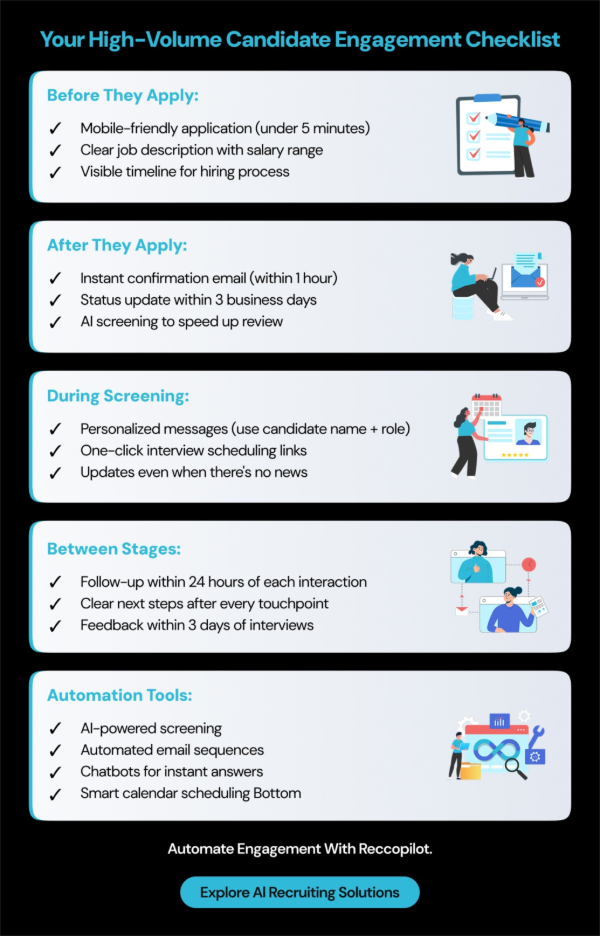
Tell candidates your timeline. "You'll hear from us within 3 business days. Interviews scheduled within one week. Final decisions take two weeks." Clear expectations prevent anxiety.
Every application should trigger instant confirmation. "We received your application. You'll hear from us by Date Y." This buys you time while showing you're organized.
Even with no news, send updates. "Your application is under review. We're interviewing next week and will update you by Friday." Updates prevent candidates from assuming you're not interested.
Use names. Reference the specific role. "Hi Sarah, thanks for applying to our Customer Service Manager role. Your retail management experience caught our attention." Small personalization matters.
After every interaction, tell candidates what happens next. "Thanks for interviewing. We're deciding next week. You'll hear from us by Wednesday either way."
This is where most candidates drop off in high-volume hiring. Long screening times, unclear next steps, and silence between stages make even interested candidates lose momentum or accept other offers.
Speed and communication matter more than perfection. Screening should move quickly, with clear status updates for every candidate, not just the ones moving forward. Even a simple message explaining where someone stands helps set expectations and keeps them engaged. Scheduling should also be frictionless, so candidates can book interviews without back-and-forth emails.
Between stages, consistency is key. Follow up after interviews, explain delays when they happen, and share what candidates should expect next. Providing basic interview prep, who they’ll meet, how to prepare, and what comes next, shows respect for their time and keeps your hiring process feeling organized and human.
Manual processes make it difficult to maintain consistent communication when hiring at scale. This is where technology plays a critical role. Candidate engagement tools help recruiters respond faster, reduce delays, and ensure no candidate is forgotten during busy hiring campaigns.
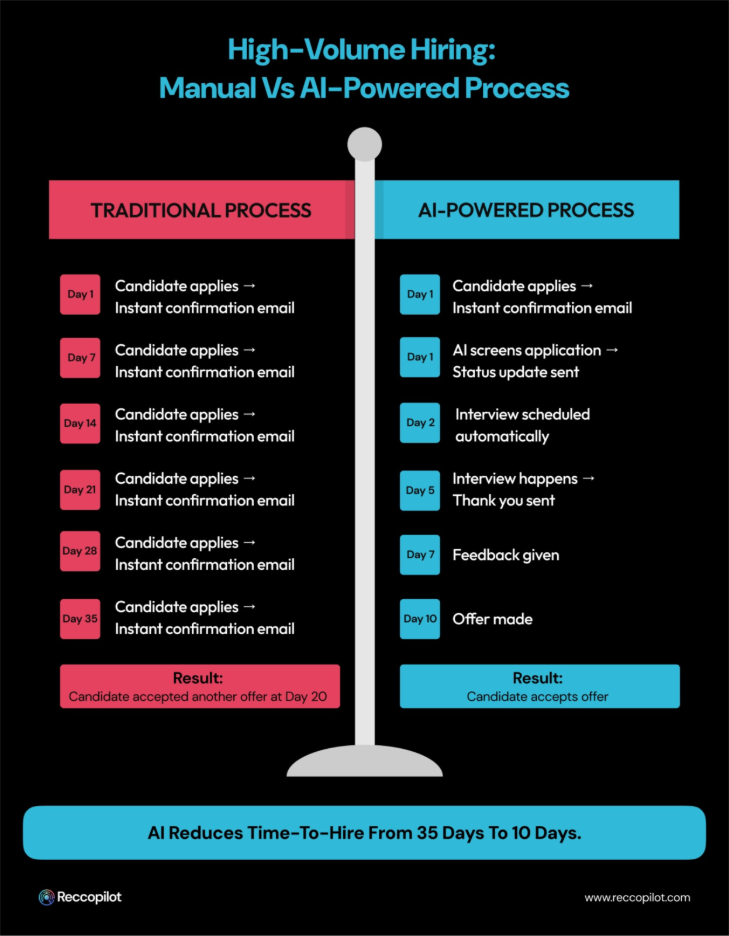
Set up emails that trigger automatically. Application gets confirmation. Three days pass, status update sent. Interview happens, thank you sent. This runs automatically while you focus on decisions.
AI screens hundreds of applications in minutes. This lets you reach out to qualified candidates the same day they apply instead of weeks later.
Chatbots answer common questions instantly, 24/7. "When will I hear back?" "What's the salary?" Candidates get answers without waiting.
AI scheduling finds interview times automatically. No back and forth. Interviews scheduled in hours instead of days.
AI tracks where every candidate is and alerts you about next steps. "Candidate X had a phone screen 5 days ago and hasn't received feedback." These reminders prevent people from falling through cracks.
Tools like Reccopilot offer candidate engagement solutions for high-volume hiring by combining automated communication, AI screening, smart scheduling, and pipeline management in one platform. Want to see how it works? Reccopilot offers a free trial so you can test these features with your actual high volume campaigns.

Even teams with good intentions often lose candidates due to avoidable mistakes. These issues usually aren’t caused by lack of effort, but by unrealistic timelines, over-automation, or unclear communication. Below are the most common mistakes that negatively impact candidate engagement.
Pure mass communication with zero personalization makes people feel disposable. Add small personal touches even in automated messages.
Don't say you'll respond in two days if it'll take a week. Set realistic expectations and meet them.
Send polite rejections. They might be perfect for your next opening or refer someone great.
Multiple interviews and assessments spread over weeks. By the time you make an offer, candidates have moved on. Eliminate steps that don't add real value.
Successful high-volume hiring teams rely on consistent processes rather than ad hoc decisions. Clear standards, measurable timelines, and regular feedback loops help maintain candidate engagement even during peak hiring periods. These best practices create structure without slowing teams down.
Applications acknowledged within 24 hours. Screening completed within 5 days. Interview feedback within 3 days. Make these standards and stick to them.
Create templates for confirmations, status updates, scheduling, and rejections. Templates save time while ensuring quality. Just add small personalizations.
Track time to first contact, time between stages, drop off rates. When metrics drop, engagement is failing. Fix problems before you lose candidates.
Survey candidates about their experience. What worked? What frustrated them? Use feedback to improve continuously.
Maintaining candidate engagement in high volume hiring comes down to speed, communication, and treating people like humans even when hiring hundreds at once. When teams focus on speed, clarity, and consistency, they naturally improve candidate engagement and increase candidate engagement across every stage of the hiring funnel.
You don't need a massive team. You need smart systems that keep candidates informed, reduce wait times, and ensure no one falls through cracks.
Start with one thing this week. Set up automated confirmations. Create response time standards. Try AI screening. Small improvements compound at scale.
The companies that maintain engagement aren't doing anything revolutionary. They're responding fast, communicating clearly, and using technology to stay organized when things get chaotic.
Your candidates are job searching right now. They're interviewing with competitors. The ones who keep them most engaged are the ones who'll hire them.




