


Types of AI Recruiting Software Recruiters Will Use in 2026
Read Time
10 Minutes
Updated On
January 14, 2026
.jpeg)
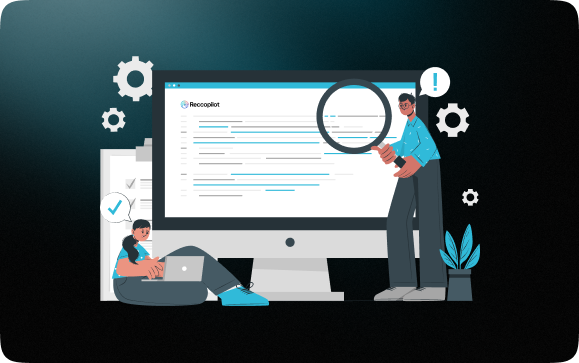


AI is now part of almost every stage of the hiring process. From sourcing candidates to screening resumes, scheduling interviews, and assessing skills, different AI recruiting software are designed to support different parts of recruitment.
Over time, these tools have grown into distinct categories, each focused on solving a specific hiring problem. Some specialize in sourcing, others in screening or interviewing, and some aim to bring multiple steps together.
Understanding these different types of AI recruiting software is important for hiring teams deciding what to adopt and how to build an effective hiring workflow.
In this blog, we break down the five main types of AI recruiting tools shaping hiring in 2026 and where each one fits in the recruitment process.
Why do companies need AI recruiting tools in 2026? Because traditional hiring can't keep pace with modern talent competition.
Traditional hiring wastes time. You post jobs manually across multiple sites. You read hundreds of resumes. You send endless emails. You play phone tag scheduling interviews. Meanwhile, competitors using AI recruiting tools are moving faster and hiring the best candidates first.
Research from Korn Ferry shows what's possible with AI recruiting tools. Companies using recruiting AI reduced time spent on administrative tasks dramatically, screened more candidates effectively, and diversified their talent pools. Korn Ferry reported a 50% increase in sourcing efficiency and a 66% decline in time to interview by implementing AI recruiting tools.
Here's what AI recruiting Software deliver:
Now let's explore the five types of AI recruiting tools transforming hiring in 2026.
This is the category I find most interesting, and honestly, the most effective when it’s done right.
An AI recruiter agent doesn’t focus on a single hiring task. It supports the entire recruitment process, from sourcing and screening to candidate communication, interview scheduling, and assessments.
Instead of stitching together multiple tools, an AI recruiter agent works as one connected system in the background. It keeps candidates moving through the process, maintains consistent engagement, and updates rankings based on real hiring signals as they appear.
Reccopilot fits into this category. It brings core recruiting functions into a single workflow, reducing tool switching and loss of context. Recruiters get better visibility across stages, and candidates experience a smoother, more coordinated hiring process.
For teams looking to simplify hiring rather than add more tools, this category often makes the most sense.
The cost advantage is significant too. Instead of paying for separate ATS, interview platform, assessment tool, and job advertising solutions, companies get everything in one subscription at a fraction of the combined cost.
Pricing
Ease of Use & Deployment
Pros
Cons
Try Reccopilot free and see how one intelligent platform transforms your entire hiring process.

An Applicant Tracking System manages job postings, stores resumes, and tracks candidates through your hiring pipeline. When you add AI to an ATS in 2026, it becomes significantly more powerful.
AI powered ATS platforms automatically parse resumes and extract important information like skills, experience, and education. They rank candidates based on how well they match your job requirements. They send automated emails to keep candidates updated. And they organize everything so recruiters can see their entire hiring pipeline at a glance.
Pricing
Ease of Use & Deployment
Pros
Cons
Greenhouse is an example of an AI powered ATS. Their system helps recruiters manage hundreds of candidates without losing track of anyone. They ensure no qualified person falls through the cracks.
Phone screens and in-person interviews take up a large share of recruiter time. AI-powered video interview platforms make this stage more efficient by allowing candidates to respond to interview questions on their own schedule or through structured live interviews.

These tools analyze candidate responses to assess communication skills, clarity, and how closely answers align with role requirements. This helps recruiters compare candidates more consistently during early and mid-stage interviews.
Pricing
Ease of Use & Deployment
Pros
Cons
Interviewer.AI is an example of this category. Platforms like this allow hiring teams to interview more candidates in less time by using recorded video responses instead of live scheduling.
Resumes and interviews don't always reveal if someone can actually do the job in 2026. Assessment platforms test real skills through practical evaluations.
These AI recruiting tools create tests for coding, writing, problem solving, or whatever skills your role requires. Candidates take tests online. The AI grades them instantly and shows you who performed best with detailed analytics.

Pricing
Ease of Use & Deployment
Pros
Cons
Codility specializes in skills assessment, particularly for technical roles. They maintain extensive test libraries for different positions. The AI grades tests accurately, detects cheating, and provides detailed performance reports.
Getting the right candidates to see your job posting is harder than it sounds in 2026. Programmatic job advertising uses AI to solve this challenge intelligently.
Instead of manually posting your job on different websites and hoping the right people see it, programmatic platforms use AI to automatically place your ads where your ideal candidates spend time. The AI determines which job boards, social media platforms, and websites will reach your target audience. It adjusts spending in real time based on what's working.
Pricing
Ease of Use & Deployment
Pros
Cons
Appcast provides programmatic job advertising that helps employers get more qualified applicants without wasting money on ads that don’t perform. The AI learns from results and continuously improves where it shows your jobs.
Start by identifying whether your hiring challenges are limited to one stage (like screening or scheduling) or spread across the entire recruitment process. If multiple steps require automation, an end-to-end AI recruiting platform like Reccopilot is more effective than combining multiple single-purpose tools. The right software should integrate with your existing systems, improve candidate experience, and scale with your hiring volume.
AI recruiting software have grown to support different parts of the hiring process, from applicant tracking to interviews, assessments, and sourcing. Each type plays a valuable role, and many teams rely on specialized tools to solve specific hiring challenges.
However, hiring is not a single action, it’s a connected process with multiple steps that depend on each other. Using separate tools for each stage often leads to fragmented workflows, disconnected data, and extra effort for both recruiters and candidates.
This is why complete AI recruiting agents are becoming more relevant moving into 2026. By bringing core hiring functions together in one system, they help teams simplify recruitment, work more efficiently, and deliver a more consistent hiring experience end to end. Start your free trial with Reccopilot today and experience what complete AI recruiting feels like in 2026.




