


How Recruitment Automation Tools Are Changing The Hiring Process
Read Time
7 Minutes
Updated On
July 29, 2026
.jpeg)


Picture a typical recruiting scenario: 15 open roles to fill by month-end, an overflowing inbox, a CEO asking for timelines, and it is already 9 PM. That is what a standard week looks like for many recruiting teams, according to professionals working in high-volume hiring environments.
The reality is that many companies are filling roles at a much faster pace without burning out their recruiting staff, and the difference comes down to recruitment automation tools. These platforms handle the repetitive, administrative side of hiring, so recruiters can focus on higher-value work.
The gap between recruiters who are using recruitment automation tools and those who are doing everything manually keeps increasing, and the efficiency gap between them is clearly visible to the teams. The teams using recruitment automation tools fill roles much faster and engage more candidates. Manual teams stay behind doing admiratives tasks that a tool can solve instantly.
This blog explains what recruitment automation tools are and why they matter today in the recruitment industry and how it helps you automate boring work and modern teams using recruitment tools hire better in less time while reclaiming time for the human work that actually is important and needs human supervision.
It's basically software that does repetitive tasks for you automatically. You set it up once, and then it just runs on its own.
Here's an easy way to think about it. You know how you can set a coffee maker to brew at 6am so you don't have to do anything in the morning? Recruitment automation is the same idea but for hiring tasks. For example, when a candidate applies for the job, the system instantly sends them a confirmation mail. Interview gets scheduled? Everyone gets a calendar invite and a reminder. Offer accepted? The system kicks off onboarding paperwork automatically.
You set the rules once. The tool handles it every time after that.
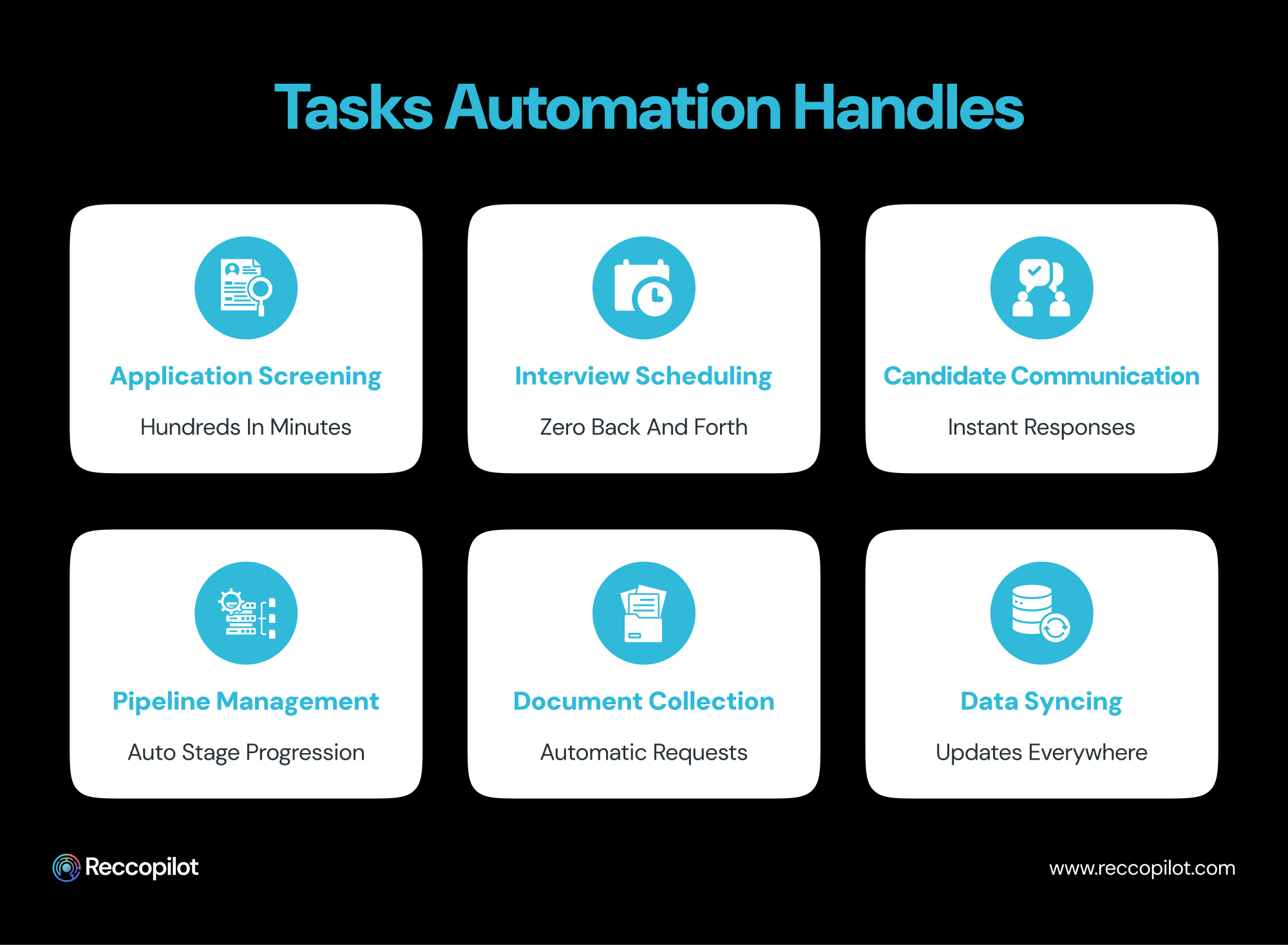
This is where the real impact becomes clear. There are various tasks that consume a recruiter's time every single day that do not require human judgment to complete. Recruitment automation tools are really good at handling this type of task.
The biggest task is going through all the applications. When hundreds of candidates apply for one job, a recruiter has to check if they meet the basic requirements. Recruitment automation can help you do this work. It checks things like experience, skills, and qualifications. It matches good candidates and sends them an e-mail and if a candidate doesn't fit, they will send a polite rejection to the ones who don't fit. No human has to open every single application, and it also saves time.
Then another task is scheduling interviews. This is most probably annoying part of recruiting, like finding time that works for candidates, the recruiter, and then the hiring manager is a total headache for them with the help of recruitment automation candidate gets link, they pick a time which works for them, and the calendar invite goes out to everyone automatically and everything's done. The recruiter did not have to go back and forth with the emails.
Recruitment automation Tools also handle all the little messages candidates need throughout the process. So basically, it handles candidate engagement as well. When you apply, you get confirmation. When you move to the next round, you will get an update. Before your interview, you will receive a reminder. All of these happen without a recruiter having to manually type anything.
There are various document recruitment automation tools which help with document management as well like, If a recruiter needs someone's references, their background check form, recruitment automation sends the request and follows up, If the person hasn't submitted yet, they get notified, everything gets stored in one place and it is easily accessible for the recruiters to, check it if anytime they want.
Another thing is analytics and reporting reveals what your recruitment automation tools are doing and whether they're working. You can track how many candidates get processed automatically, how much time saved, response rates to automated messages, and where recruitment automation might need adjustment.
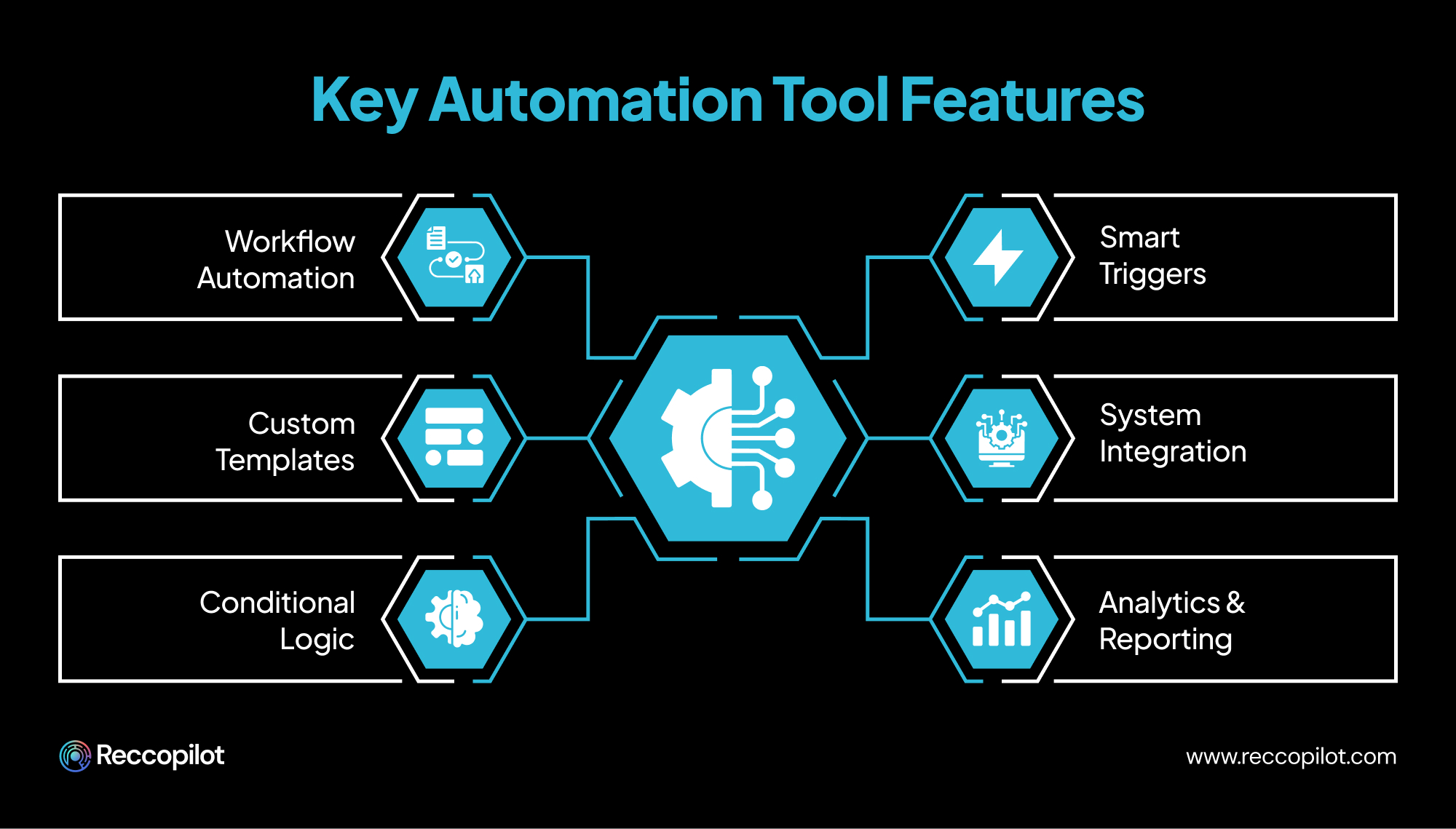
When recruiters are no longer spending the majority of their day on repetitive administrative tasks, they can redirect their energy toward the work that genuinely requires human judgment, evaluating culture fit, building relationships with candidates, maintaining a smooth and transparent process, and working with hiring managers to clarify exactly what a role requires. These are the functions that only a person can perform effectively.
There are many various companies that use such recruitment automation tools and fill jobs way faster than companies that still do everything by hand. There is a huge difference, and candidates have a better experience too because they hear back faster and always know what's going on? So, they are inclined towards these kinds of companies only.
Also, one more thing, recruitment automation tools doesn't get tired or forget things. If you're manually sending emails all day, as a recruiter, you might forget one person or send something to the wrong person by accident. After all, we are all human. Recruitment automation just does the same correct thing every single time.
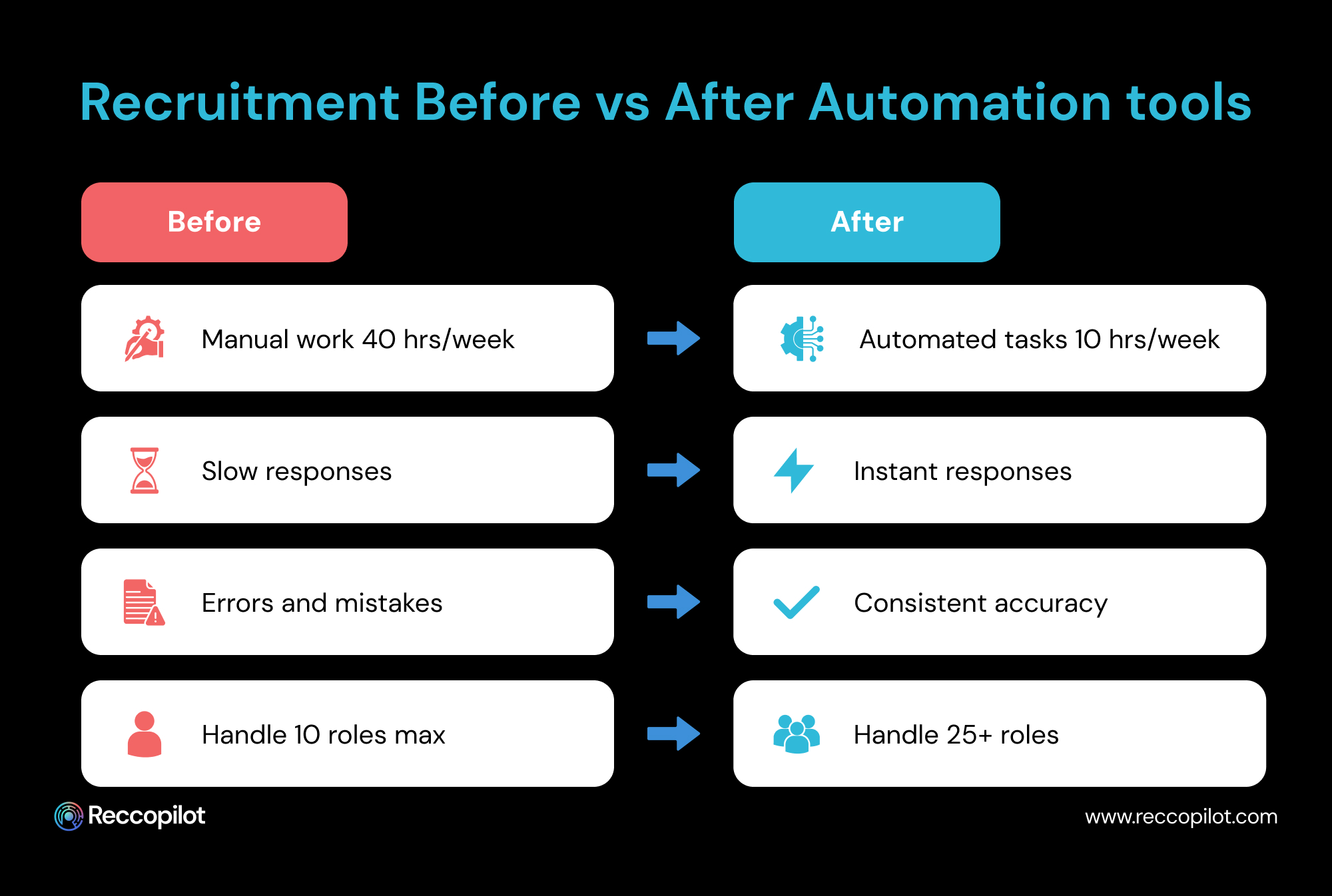
Especially for smaller companies and smaller teams, this is a big deal. If you only have one or two recruiters, you cannot afford to waste hours on work that a computer, or a tool can handle. Recruitment automation tools basically lets a small team do the work of a much bigger one in a very less time. So, investing in a tool which lets you help with all the recruiting process is a good decision.
Want to check out how recruitment automation tools actually work in real time? Reccopilot offers a free trial so you can test automated workflows with your real hiring process before committing.

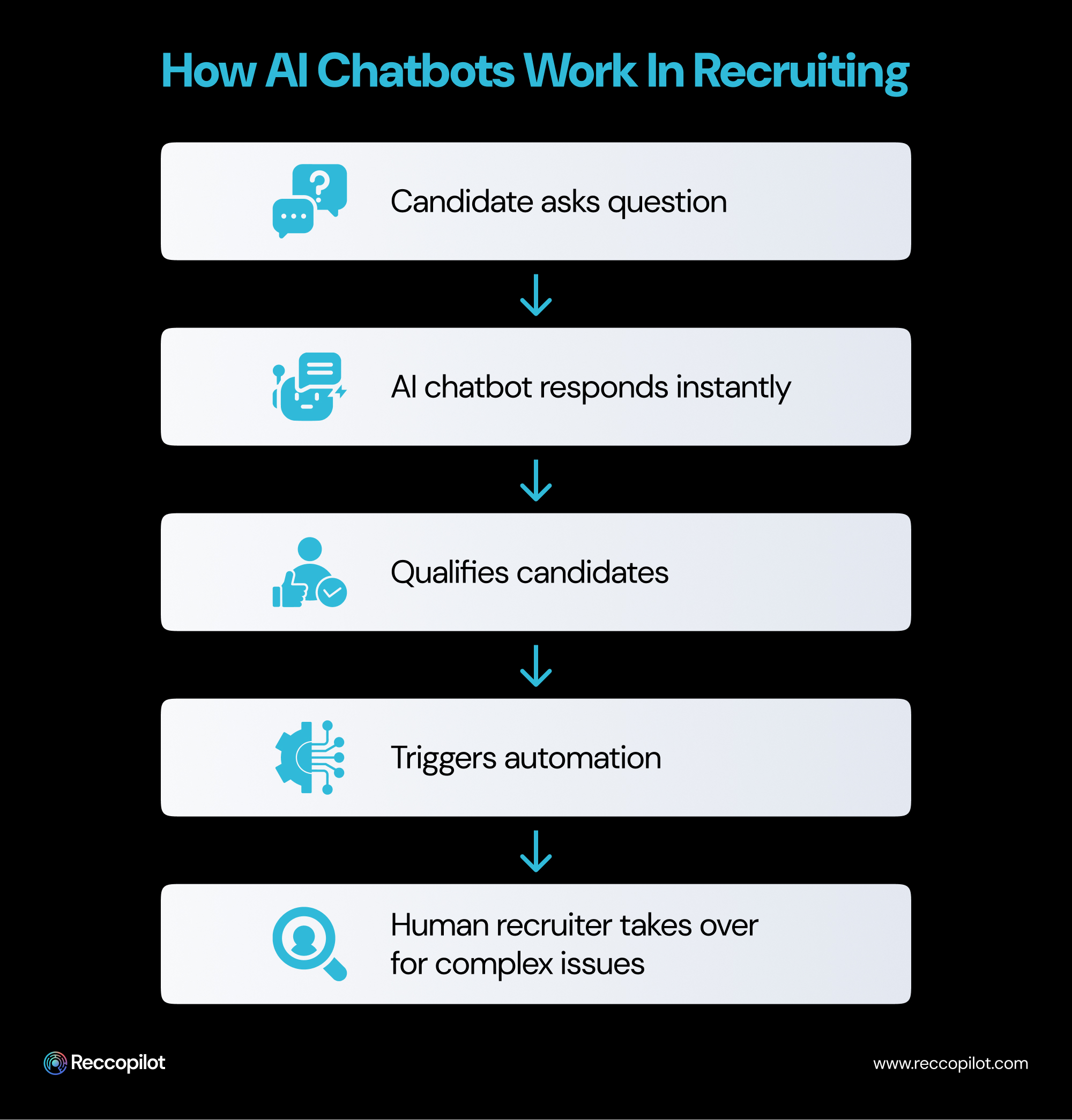
There are many recruitment tools which now use AI chatbots as part of their recruitment automation stack. These are conversational interfaces deployed on a company's careers page or website to handle candidate inquiries in real time, because not every single time a recruiter can be present there to handle a query, right? So that's where a chatbot comes in handy.
Instead of emailing a recruiter and waiting a day to hear back, a candidate can simply just ask the chatbot something like what does the interview process look like? And get an instant answer right away. Chatbots can also conduct initial screening by asking candidates qualifying questions before a human recruiter enters the process, saving significant recruiter time at the top of the funnel.
Chatbots work best for simple common questions that candidates might have. When it gets to the point where someone needs real advice or is talking about salary, compensation, work culture, it is a complicated situation, a human recruiter needs to step in. Chatbots are helpers, not replacements.
Best practice for recruiters using AI chatbots is to deploy them for high-volume, routine candidate interactions while keeping humans available for nuanced or sensitive conversations. Chatbots also excel at answering common questions related to roles, application status and interview process, company culture, and next stop. They sometimes struggle with discussions about compensation, complex situations, or candidate concerns regarding empathy.
These chatbots integrate with recruitment automation tools to create seamless experiences for the candidates. Chatbots qualifies a candidate, recruitment automation tool schedules their interview, sends reminders, collects required documents, and it also keeps them updated through the process. Human recruiters only need to get involved when real judgment is needed in the whole recruiting process, thus giving back time to the recruiters for real work which needs their presence.
There are important considerations to keep in mind. Recruitment automation is powerful, but it is possible to over-rely on it. If every touchpoint a candidate experiences is automated, the process can start to feel impersonal. Candidates want to feel treated as individuals, not as entries in a database. People still want to feel like they're being treated as an actual person, not just numbers in a system.
Automated messages also have to be written well. If the e-mail sounds robotic or super generic like, “Dear applicant, we have received your submission”. That's actually worse than no e-mail at all. Good, automated messages still feel warm and personal. They just get sent automatically. You just need to select or already put in the tool what needs to go.
As a recruiter, you can't just set everything up and never check it again. Things change, jobs change, and people change. The messages you wrote six months ago might not make sense anymore or might feel different. It's worth checking your recruitment automations every few months to make sure everything still works the way you want. It needs to be updated.
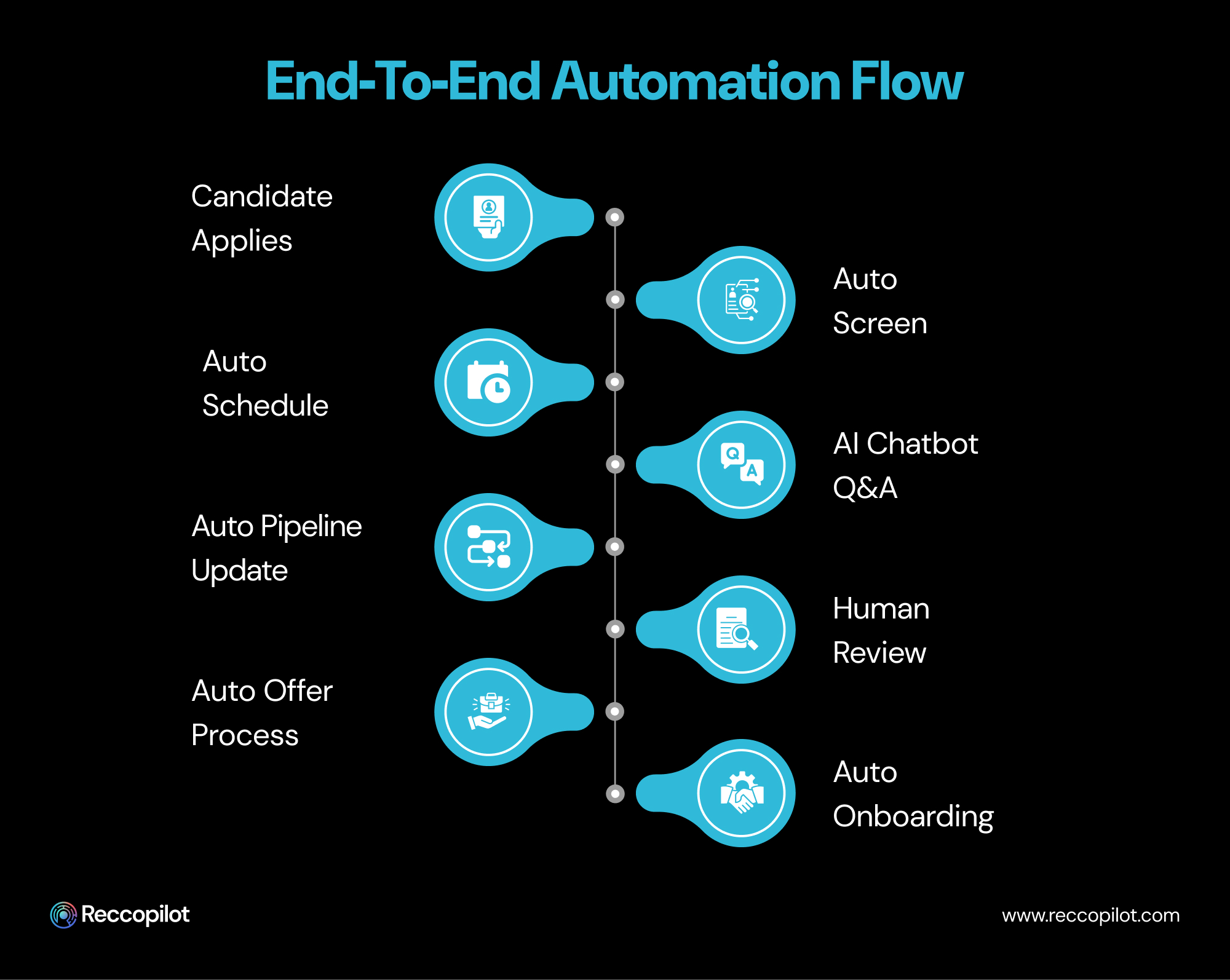
Recruitment automation tools remove repetitive administrative tasks from a recruiter's workload so they can invest their time in work that requires their presence, on like, building real conversation with candidates, keeping the connection feel real, etcetera. Candidates get faster responses. Recruiters save hours every week. Companies fill jobs faster. Everyone wins.
It's not about replacing the human side of hiring; it's about making sure humans are only doing the things that need a human presence. Sorting through 300 applications or sending the same scheduling e-mail for the 100th time does not need a human requirement. Building and making a real connection with a candidate is what a recruiter's job should be.
If your recruiting team is still doing everything manually, it's high time that you start looking into what recruitment automation tools could take off your list, even just automating scheduling and sending confirmation e-mail can give you back several hours a week that adds up fast.




