2026 Holiday Offer | 26% off with code NY26REC - Choose a Plan

Complete Guide to Virtual AI Interviewers for Modern Recruitment in 2026

Read Time
10 mins
Updated On
January 13, 2026
Author Ruchi logo
Ruchi Kumari
Content & Thought Leadership

Introduction

A recruiting manager told us she conducted 47 first-round interviews in three weeks. For one job. By interview 20, she wasn't even listening anymore. Just going through the motions.

Sound familiar?

Here's the thing. Virtual AI interviewers are changing this. Companies using AI video interview platforms are cutting screening time by 60-80%. According to LinkedIn, 67% of hiring pros say AI saves time on interviews and scheduling.

But AI interviewers aren't perfect. Use them wrong and they make hiring worse, not better.

So what is an AI interviewer? How does it work? Can it replace human recruiters?

Let's break it down simply.

What is an AI Interviewer?

A Virtual AI interviewer is software that conducts job interviews using artificial intelligence. Instead of recruiters spending 30 minutes with every candidate asking the same questions, AI handles it automatically.
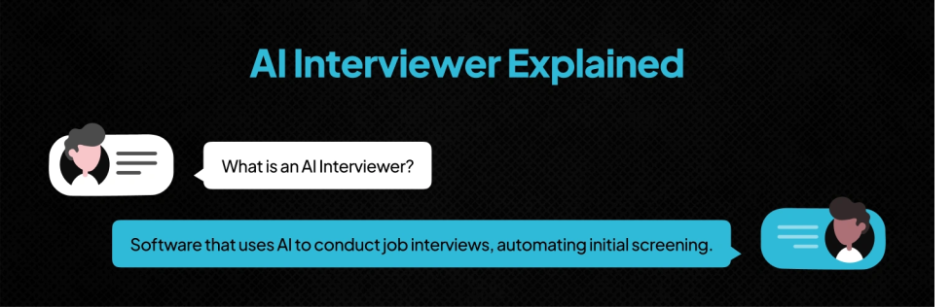
Think of it this way: AI interviews handle the repetitive screening part. They ask questions, analyze answers, score candidates, and flag top matches for recruiters to review.

Key point: AI interviewer is a screening tool, not a replacement for humans. It handles boring early stages so recruiters can focus on actual conversations with qualified people.

What AI Interviewer Does:

  • Uses Natural Language Processing to understand answers (not just keywords)
  • Gets smarter over time through machine learning
  • Analyzes communication skills and response quality
  • Ranks candidates based on job requirements
  • Connects with your existing hiring tools

What It's NOT:

  • Not perfect at understanding context or culture
  • Not making final hiring decisions alone
  • Not replacing human judgment

Types of AI Interviewers

Not all AI interviewers work the same. Here are the main types:
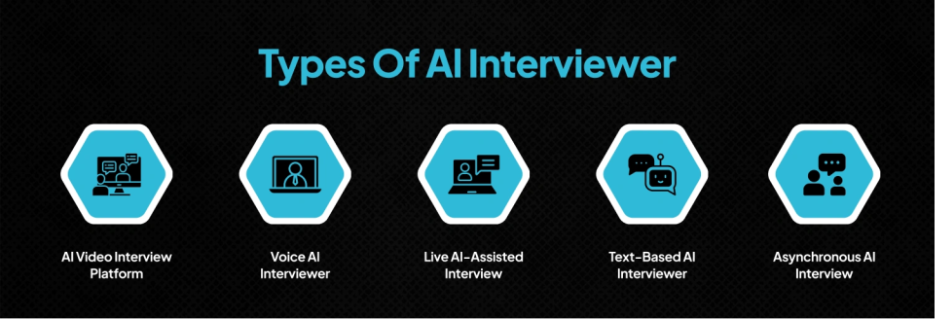
  • AI Video Interviewer - Candidates record video answers. AI analyzes what they say, tone, sometimes facial expressions. Best for: High volume roles, sales, customer facing jobs Time: 20-30 minutes
  • Text Based AI Interviewer - Chat style where candidates type answers. AI asks follow ups. Best for: Tech roles, remote positions, people who prefer writing Time: 15-25 minutes
  • Voice AI Interviewer - Phone style conversation. Most natural feeling. Best for: Entry level, roles needing strong verbal skills Time: 15-20 minutes
  • Asynchronous Interview - Candidates complete on their own schedule. Best for: Global hiring, busy passive candidates Time: 20-30 minutes \
  • Live AI Assisted - Human interviews but AI helps with notes and suggestions. Best for: Senior roles, final rounds Time: 30-45 minutes

Most companies use video for initial screening, then live AI assisted for second rounds.

How AI Interviewers Work

Step 1: Setup  

Company sets job requirements, questions, and scoring criteria. Bad setup means bad results.

Step 2: Candidate Gets Link  

Candidates receive email with interview link. Usually have 3-7 days to complete it.

Step 3: The Interview  

AI asks questions one at a time. Adapts follow ups based on answers. Takes 15-30 minutes.

Step 4: AI Analysis  

AI transcribes responses, understands meaning, identifies skills, compares to ideal answers. Happens in minutes.

Step 5: Results  

Recruiters see scores, analysis, recordings, and who to interview next.

Real Example: Tech company got 150 applications. AI interviewed all 150 in 6 hours. Flagged top 20. Recruiting team reviewed those 20 in 4 hours instead of 75+ hours of phone screens. Hired someone in 3 weeks.

Why Companies Use AI Interviewers

  • Saves Massive Time - 50 candidates = 25 hours of phone screens. With AI? Maybe 3-4 hours reviewing results. That's 80% time saved.
  • Same Questions for Everyone - Humans get tired and ask different questions. AI asks identical questions every time. Fair for all candidates.
  • Flexible for Candidates - Candidates can interview at 11pm if they want. No scheduling hassles. Great for people with jobs who can't take calls during work.
  • Handles High Volume - 20 applicants or 200, AI handles them all at once. Retail company hiring 500 seasonal workers cut recruiting team from 3 people to 1.
  • Better Data - See patterns across candidates. Know which questions predict success. Improve your hiring over time.
  • Less Bias (When Done Right) - AI focuses on skills, not appearance or age. But only if trained correctly. Bad AI can make bias worse.

How to Use AI Interviewers Right

  • Be Specific About Requirements - Don't say "good engineer." Say "mid level Python engineer, 3-5 years, Django, agile experience."
  • Ask Smart Questions - Bad: "What are your strengths?" Good: "Describe a project where you learned new tech fast. How'd you do it?"
  • AI Screens, Humans Decide - Let AI eliminate clearly bad fits. Humans make final hiring choices.
  • Always Review AI Scores - One company almost rejected a great candidate because AI scored communication low. Person was just nervous on camera but great in person.
  • Tell Candidates What to Expect - Say upfront they'll do AI interview. Explain why and how it works. Surprises create bad experiences.

Test First Try with small group. See what works. One company cut interview from 45 to 25 minutes after seeing 60% drop off rate.

Challenges to Know About

  • Legal Stuff - Illinois requires consent for AI interviews. NYC requires bias audits. California has new rules about automated hiring. Make sure you're compliant.
  • AI Can Be Biased - If your training data is biased, AI learns that bias. Audit regularly. Have humans review.
  • Some Candidates Hate It - Not everyone likes talking to AI. Offer human phone screen as alternative.
  • Tech Problems - Video doesn't load. Audio cuts out. Platform crashes. Have good tech support.
  • AI Misses Things -  Cultural nuances. Sarcasm. Context. Life experience. That's why humans must review.

What's Coming in 2026

AI interviews are becoming standard for high volume hiring. Not experiments anymore. Default process.

Natural language processing is way better. AI understands context and asks smarter follow ups.

Soon: Personalized questions based on each candidate's background. Live skill tests during interviews. Predictions about who'll succeed long term. Interviews in dozens of languages.

The future isn't humans OR AI. It's both working together.

Our Take

AI interviewers handle repetitive screening so recruiters can focus on relationship building and making smart decisions.

Use AI for screening. Use humans for selection. That's the winning combo.

Start small. Test with one role. See how it works. Tools like Reccopilot offer free trials so you can try before committing.

Companies getting the AI human balance right now will have huge advantages in hiring. Virtual interviews aren't going anywhere. Forbes says 82% of companies use them and 93% plan to keep using them.

The question isn't if you should use AI interviewers. It's how to use them without losing the human touch that makes great hiring happen.

Ready to try? Start your free Reccopilot trial and see how AI interviewing transforms your hiring process.

FAQs

What is an AI interviewer and how does it work?
An AI interviewerr conducts job interviews automatically using artificial intelligence. It asks questions via video, voice, or text, analyzes answers using natural language processing, scores candidates against job requirements, and shows recruiters the top matches. Takes 15-30 minutes and candidates do it on their schedule.
Can AI interviews replace human recruiters?
No. AI handles repetitive screening efficiently but can't replace human judgment, relationship building, or cultural assessment. The future is AI doing initial screening while humans focus on final decisions and complex evaluation. AI makes recruiters better, not obsolete.
What are the different types of AI interviewers?
Five main types: AI video platforms (record responses), text based (chatbot style), voice (phone call format), asynchronous (complete anytime), and live AI assisted (human leads with AI help). Each works for different roles and hiring volumes.
Are AI video interview platforms accurate?
Accuracy starts at 60-70% and improves to 85-90% after you refine criteria and give feedback. AI is great for objective qualification matching but struggles with cultural fit and soft skills. Best practice: use AI for screening, humans for final selection.
Share this Blog
LinkedIin logoWhatsapp logofacebook logotwitter logo

In this article

    Claim Your Free
    Personal AI Hiring Agent
    Activate your 30 Day Free Trial
    Activate Now
    DMCA.com Protection Status