


How Recruitment Analytics Software Helps Recruiters Make Data-Driven Hiring Decisions
Read Time
7 min
Updated On
March 20, 2026
.jpeg)


We've all sat in meetings where hiring managers ask tough questions. "Why does it take so long to fill engineering roles?" "Which job boards actually work?" "Why did our last three hires leave within six months?"
Without data, we guess. We say things like "the market is competitive" or "good candidates are hard to find." We defend our work but can't prove what's working and what isn't.
Here's the uncomfortable truth we face as recruiters. Most of us make decisions based on gut feeling and anecdotal evidence. We think a certain job board works well because we remember one good hire from there. We assume our process is fine because nobody's complaining loudly. We don't actually know our metrics.
Meanwhile, every other department runs on data. Marketing knows their conversion rates. Sales tracks pipeline metrics. Finance measures everything. But recruiting? We're often flying blind, making expensive hiring decisions without real insights into what drives results.
This is exactly why recruitment analytics software matters. It transforms recruiting from guesswork into a measurable, improvable process. When you can see which sourcing channels bring quality hires, how long each hiring stage actually takes, and where candidates drop off, you make smarter decisions and prove your value.
This blog explains how recruitment analytics works, what metrics actually matter for recruiters, and how modern analytics recruiting tools help you hire better while demonstrating clear ROI to leadership.
Recruitment analytics software collects, measures, and visualizes data from your entire hiring process. Instead of manually tracking metrics in spreadsheets or guessing at performance, the software automatically captures everything and shows you what's happening.
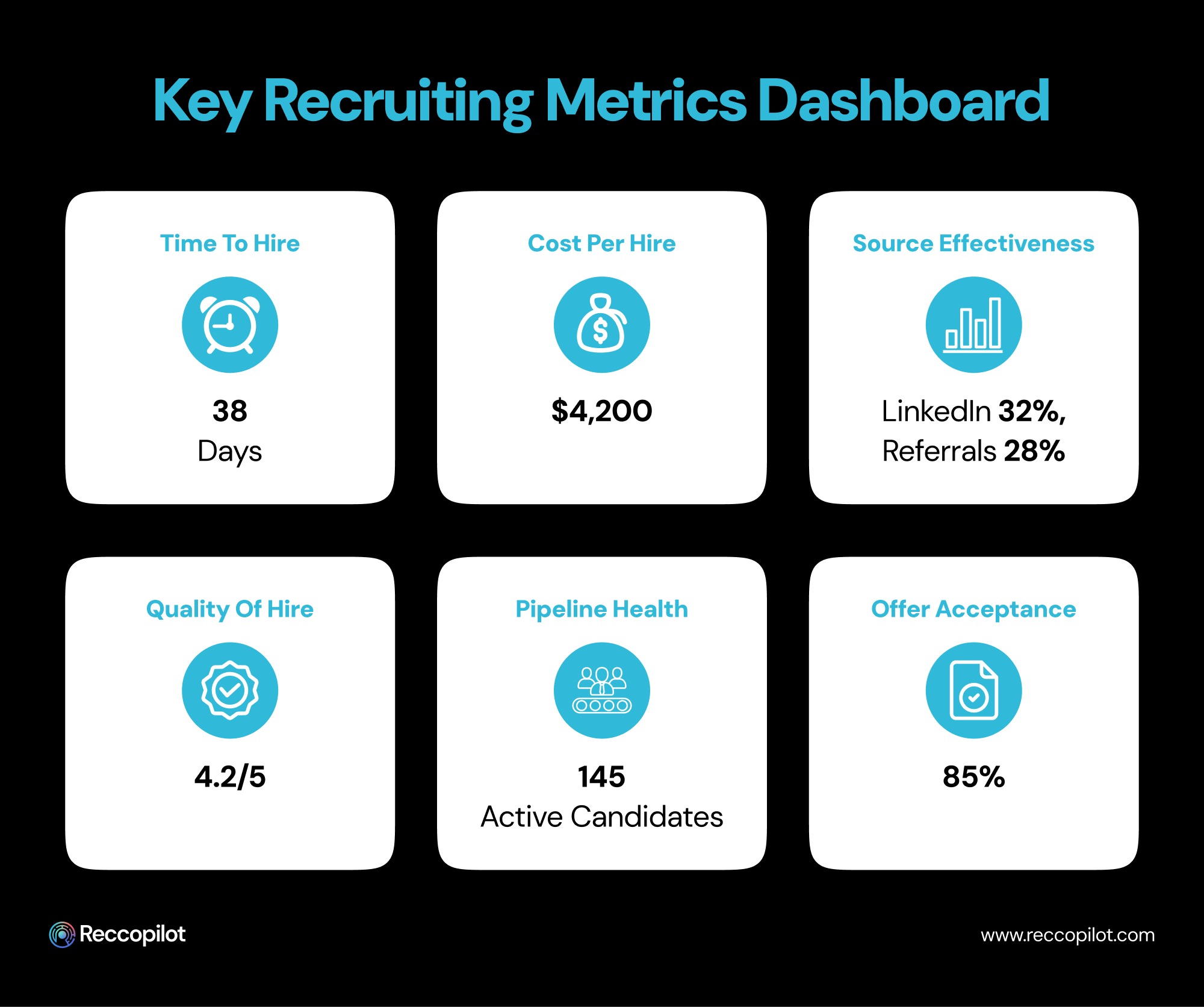
Think of it as a dashboard for your recruiting operation. Just like your car dashboard shows speed, fuel, and engine status, recruitment analytics shows time to hire, cost per hire, source effectiveness, candidate pipeline health, and dozens of other metrics that matter.
What makes recruitment analytics different from basic reporting is depth and intelligence. Simple reports show what happened. Analytics show why it happened, predict what will happen next, and recommend what to do about it. This data analytics recruitment approach turns numbers into actionable insights.
Understanding which metrics matter helps you see the value analytics in recruitment provides. Not all data is equally useful, but certain measurements directly impact hiring success.
Modern recruiting analytics software automatically tracks and calculates the metrics that determine hiring effectiveness and efficiency. Time to hire measures days from posting a job to accepting an offer. This shows process speed and helps identify bottlenecks slowing you down. Long time to hire means losing candidates to competitors.
Cost per hire calculates total recruiting expenses divided by number of hires. This includes job board fees, recruiter salaries, tools, agency costs, everything. Knowing cost per hire helps you budget accurately and identify where money gets wasted.
Source of hire tracks which channels bring candidates who actually get hired. Are your best engineers coming from LinkedIn, referrals, or niche job boards? Analytics recruiting tools show this clearly so you invest in what works and cut what doesn't.
Quality of hire measures new employee performance and retention. Did they meet expectations? Are they still with you after six months? This connects recruiting decisions to business outcomes and proves hiring quality.
Candidate pipeline metrics show how many candidates sit at each hiring stage. Where do people drop off? Which stages take longest? Pipeline data reveals process problems before they cost you great candidates.
Offer acceptance rate tracks how many offers get accepted versus rejected. Low acceptance rates signal problems with compensation, candidate experience, or how you sell opportunities. This metric shows whether you're competitive.
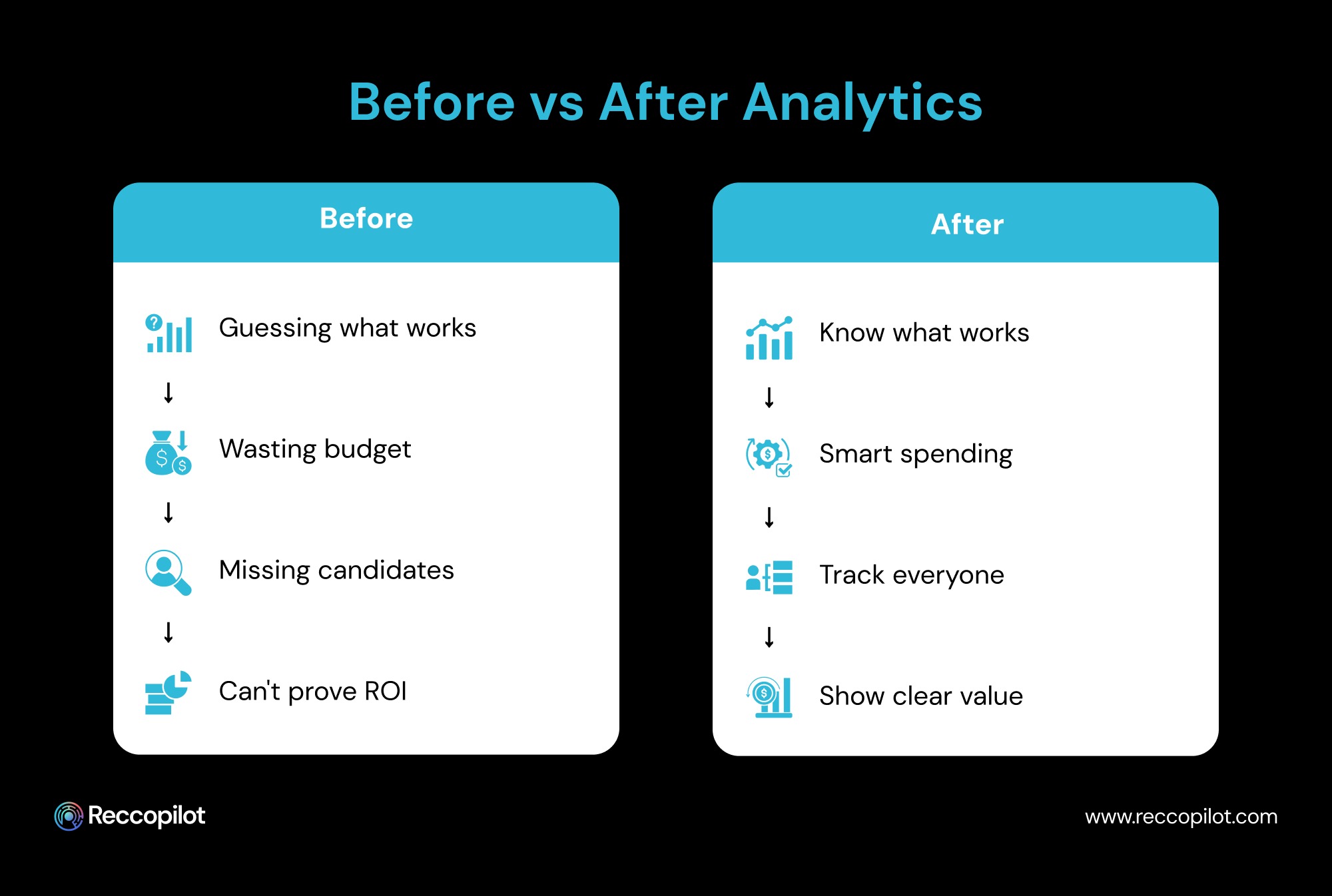
Seeing how recruitment data analytics actually changes daily decisions makes the value concrete and understandable for recruiting teams.
Analytics show which sources deliver quality hires versus just application volume. You might get 100 applications from one job board but zero hires, while another source sends 10 applications and three hires. Data driven recruiting means investing in sources with proven ROI and cutting wasteful spending.
When analytics show candidates waiting two weeks between phone screen and onboarding interview, you know where time gets wasted. You can fix that specific bottleneck instead of guessing why hiring takes so long. Recruitment data analytics pinpoints exactly where improvements matter most.
Analytics reveal where candidates drop out. If 50% of people abandon your application after the first page, your application is too long or asks inappropriate questions. If candidates ghost you after interviews, maybe you're taking too long to follow up. Data shows what to fix.
When leadership questions recruiting budgets, analytics provide answers. Show them that LinkedIn Recruiter costs $10,000 annually but sources 30% of your hires at $500 cost per hire, while agencies cost $15,000 per hire. Data justifies your tools and headcount.
Historical analytics help forecast future needs. If engineering hiring always spikes in Q1, you prepare pipeline in Q4. If sales roles take 45 days to fill on average, you start sourcing when managers mention they'll need someone in two months, not when the role opens.
Not all analytics recruiting software delivers equal value. Understanding key features helps you choose tools that actually improve your recruiting instead of just generating reports nobody reads.
Every recruiting team without proper analytics in recruitment faces predictable problems that waste time, money, and opportunities to improve.
.jpg)
Without data, you can't show recruiting's business impact. Leadership sees recruiting as a cost center instead of strategic function. Analytics demonstrate clear ROI, quality of hire metrics, and how recruiting decisions affect revenue and retention.
When you don't track what works, you keep making the same errors. That job board that's never produced a good hire? You keep paying for it because you don't have data showing it's worthless. Analytics prevent this waste.
You know hiring takes too long but not where time disappears. Is it slow manager feedback? Too many interview rounds? Bottleneck at offer approval? Recruitment analytics pinpoint exactly where delays happen so you fix root causes instead of guessing.
Most recruiting budgets include significant waste on sources that don't deliver. Analytics show precise ROI per source so you reallocate budgets from low performers to proven winners. This alone often pays for analytics software.
Without pipeline visibility, great candidates slip through cracks. They sit at screening stage for two weeks because nobody realized they were there. Analytics alert you to candidates who need attention before they accept other offers.
Artificial intelligence is transforming recruitment analytics from backward looking reports into forward looking strategic tools that predict outcomes and recommend actions.
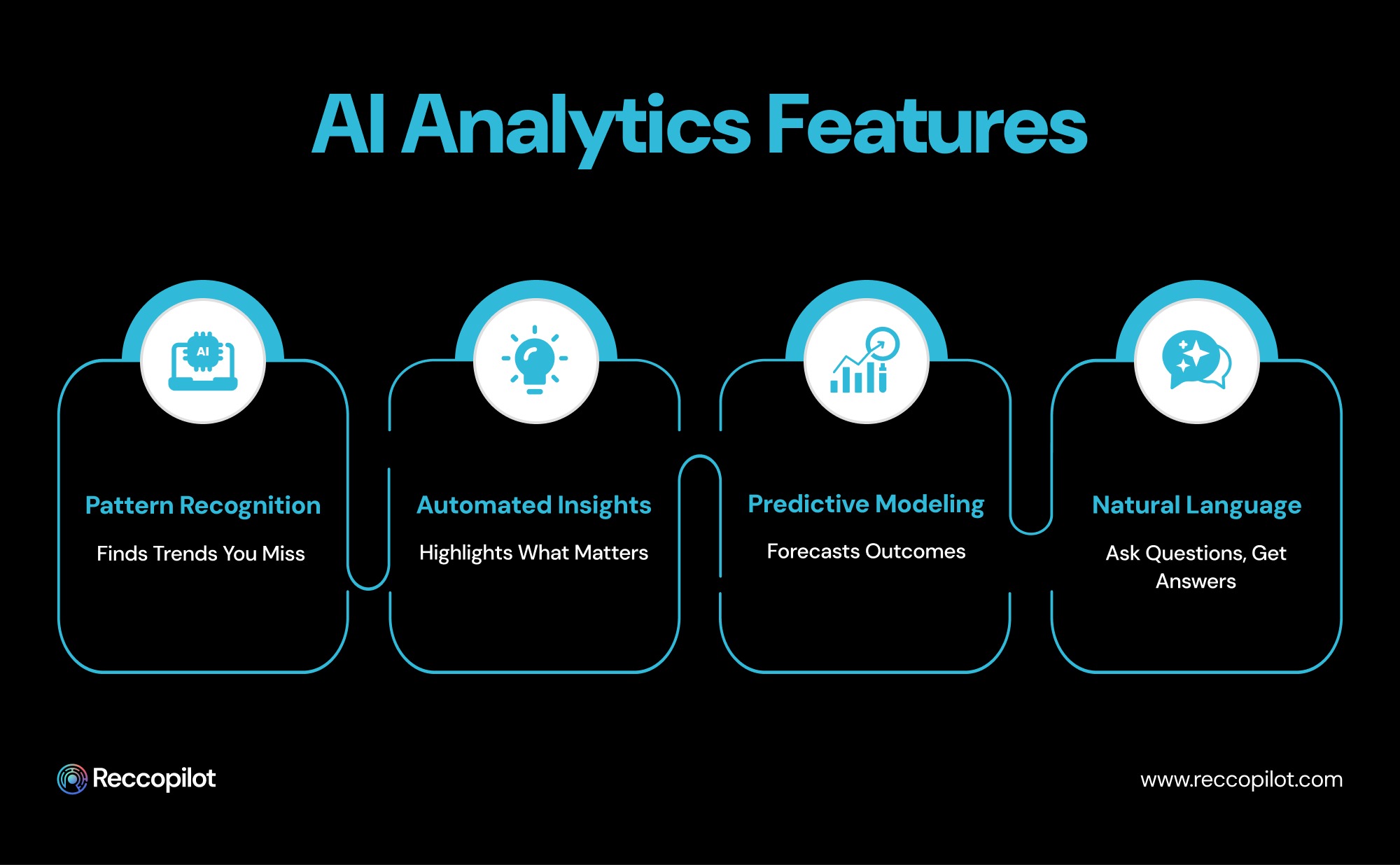
Platforms like Reccopilot integrate AI powered recruitment analytics directly into recruiting workflows. You get automatic insights on what's working, alerts about problems before they cost you hires, and recommendations for improvement. Want to see how AI analytics transform guesswork into confidence? Reccopilot offers a free trial so you can test these capabilities with your actual recruiting data.
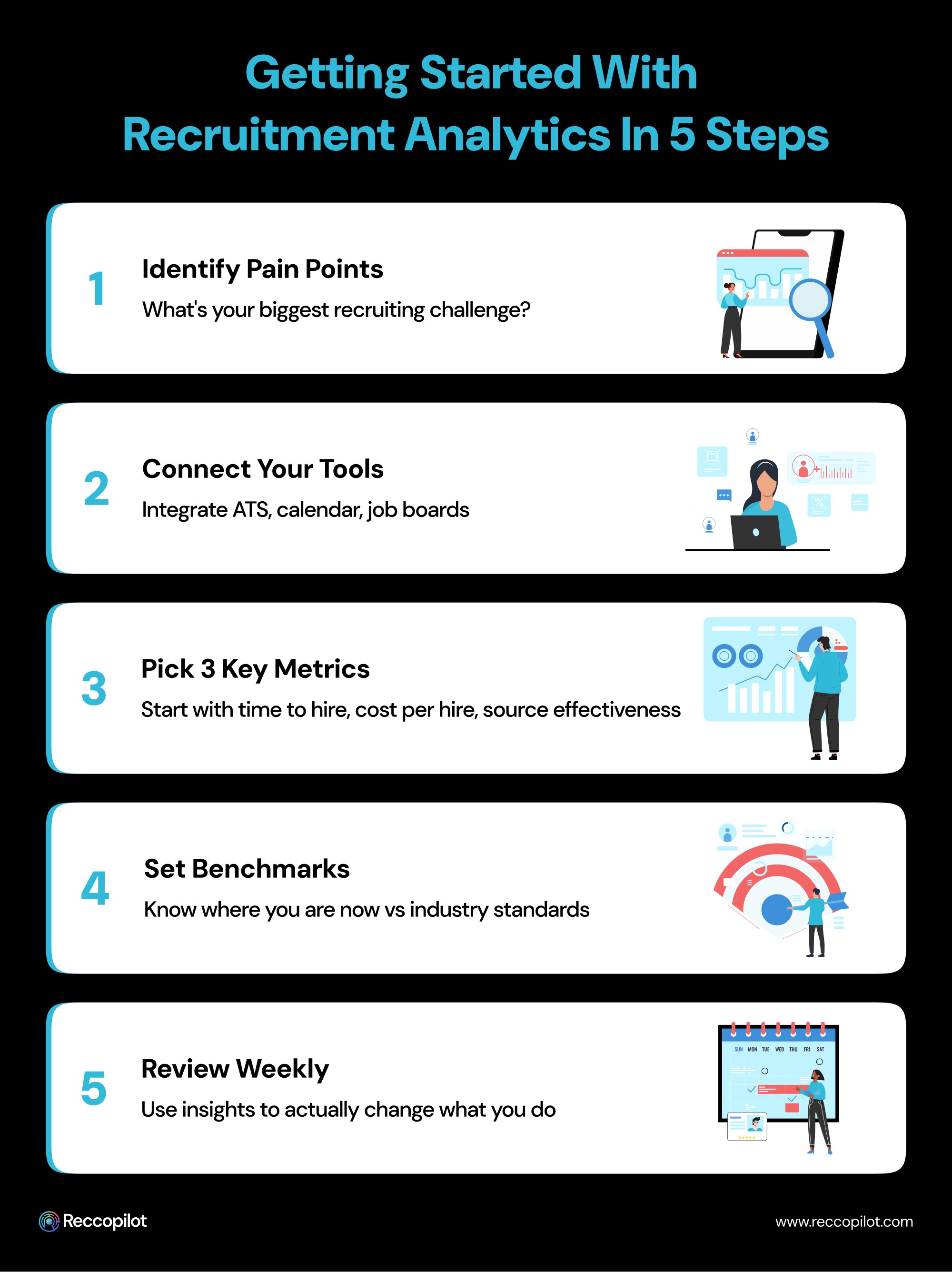
If you're currently tracking recruiting metrics in spreadsheets or not tracking at all, implementing recruitment data analytics seems overwhelming but follows a clear path.
Recruitment analytics software transforms recruiting from art to science. The best recruiters combine data insights with human judgment, using analytics to inform decisions while maintaining the personal touch that attracts great candidates.
Every hour you spend guessing what works is time not spent on proven strategies. Every dollar wasted on ineffective sources is budget that could go toward what actually delivers hires. Analytics recruiting eliminates this waste and helps you operate like the strategic business function recruiting should be.
We live in a data driven world where every department measures performance except recruiting in many companies. Modern analytic recruiting tools change that and put recruiting on equal footing with other functions that prove their value through metrics.
The question isn't whether to use recruitment analytics. It's whether you'll start measuring what matters before leadership demands it or competitors outperform you through smarter data use.




