


Recruiter Burnout Isn't Just About Workload, It's About How Hiring Works Today
Read Time
7 Minutes
Updated On
July 29, 2026
.jpeg)


Most people hear “burnout” and they straight up think that someone just needs a vacation, take a few days off, rest up, and then come back refreshed. But anyone who has worked in recruiting knows it's not that simple. Recruiter burnout doesn't just go away over a long weekend. It comes back on Monday morning with a full inbox, three hiring managers waiting for your updates, and the calendar packed with interviews that were somehow all scheduled at the same time.
But what exactly happens is, recruiter burnout is not just about working too many hours. It runs deeper than that. It's about how hiring works right now. The systems, the pressure, the expectations, and the sheer volume of repetitive tasks that recruiters have to get through every single day. Until we talk about those things, honestly, burnout in the recruitment industry is just going to keep getting worse.
In this blog, we're going to cover what recruiter burnout is and why it is so common nowadays, and the real reasons behind recruitment burnout, and how to fix it. What changes should be made to decrease recruiter burnout.
Recruiter burnout is when recruiters feel mentally and emotionally drained from their work to the point that it starts affecting their performance and mental health as well as physical well-being. It's not just tiredness. It's that feeling where you're working all day, but nothing feels like it's moving forward where you are doing the same things over and over again and still falling behind, and no results can be seen.
And to be honest, it's incredibly common right now. The recruitment industry has changed a lot over the past few years. Companies are hiring faster, candidates have more options, and the pressure on recruiters to fill roles quickly while also keeping everyone in the company happy has gone through the roof. At the same time, a lot of recruiting teams are still doing huge chunks of their work manually with outdated systems that weren't built for the quick hiring demands today, which is why they are falling behind, and the work is not getting done.
That combination is a recipe for recruitment burnout on a massive scale.
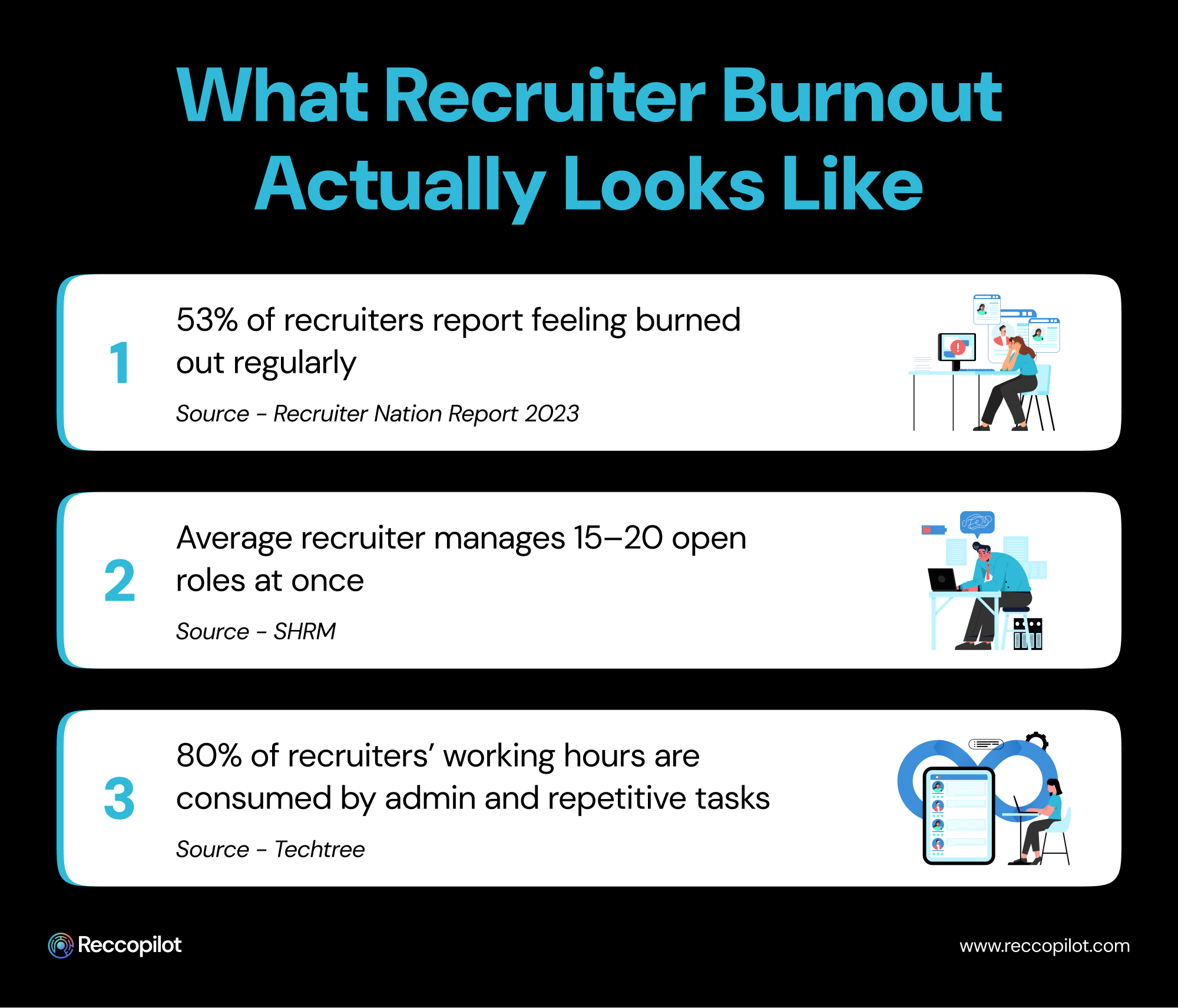
Let's be specific about what actually causes recruiter burnout, because it's not just one thing. Below are the few reasons mentioned Which are the major reasons for recruiter burnout?
One of the major reasons is mass recruitment because it is one of the biggest high-tension pain points in the recruitment industry right now. When a company needs to hire 50 or 100 people in a short time, recruiters are the ones who are expected to go through hundreds or sometimes even thousands of applications, respond to candidates, schedule interviews, collect documents, follow up, coordinate with hiring managers and keep everything updated in the system and that too manually.
And no one person can do all of that well under that kind of pressure. And yet that's what many recruiters are asked to do every single day. And that's not fair to them. The workload isn't just heavy; it's the kind of heavy that comes from doing the same small task 500 times in a row, every single day. That kind of repetitive manual work drains people in a very specific way that rest doesn't always fix, and that needs to change.
The second thing is now a days when automation is everywhere, candidates today are not very patient. They are applying to multiple companies at once, and they expect to hear back quickly. If a company is slow, candidates move on. That puts recruiters in a tough spot. Because they're dealing with huge volumes of application but still expected to respond to everyone & that too quickly.
When recruiters fall behind on responses because they are buried in admin work, candidates drop out. Then the hiring manager gets frustrated because the pipeline is empty again and the recruiter gets blamed for something that's that wasn't their fault. That cycle is one of the most draining parts of recruiter burnout.
A lot of recruiting teams are working with systems that weren't designed for the scale or speed of hiring today. Their applicant tracking system doesn't talk to their calendar. Their email is separate from their candidate database. Every update has to be entered in three different places. Scheduling an interview involves a chain of emails that goes back and forth for days.
These are all high-tension pain points in recruitment that add hours of unnecessary work every week. When your tools are fighting against you instead of helping you, burnout happens fast.
Reccopilot offers a free trial so you can actually see how it works with your real hiring process before committing to anything. For teams dealing with high volumes or chronic recruiter burnout, it's a low-risk way to find out how much time automation can genuinely give back.
This is one of the part people don't talk about enough. Recruiters do all the work, but they don't always control the outcome. A hiring manager rejects a candidate at the last minute. The budget for a role gets frozen. A great candidate gets a better offer somewhere else. All of that happens to recruiters constantly, and there's often nothing they can do about it because it's out of their hands. They cannot indulge in that process.
Doing a lot of work and feeling like you have no control over whether it's actually leads anywhere is exhausting in a way that's hard to explain to people outside the industry.

The standard advice for burnout is to reduce workload, set boundaries, take breaks. That's good advice generally. But in recruiting, it misses the point.
If a recruiter takes a week off, the work doesn't pause. The applications keep coming. The roles stay open. The hiring managers still need updates. Someone else on the team picks up the slack, and now they're burning out too. Or the recruiter comes back to double the work and immediately feels like they never left.
The problem isn't that recruiters need to rest more. The problem is that the way recruiting is structured right now requires too much human time on tasks that don't need a human. Until that changes, recruiter burnout will keep happening no matter how many mental health days people take.
This is where things start to get better. Recruiter automation is basically using software to handle the repetitive, time-consuming parts of hiring automatically. Things like sending confirmation emails, scheduling interviews, moving candidates through pipeline stages, collecting documents, sending reminders. All of that can be set up once and then run on its own.
When recruiters aren't spending half their day on tasks that a system could handle, they have time to do the parts of recruiting that need a real person. Reading between the lines on a candidate's background. Having a real conversation to figure out if someone is the right fit. Building relationships with hiring managers. Thinking strategically about where to find good candidates.
AI recruiting automation takes this even further. AI tools can screen large batches of applications and identify strong matches based on more than just keywords. They can answer candidate questions instantly through chatbots, any time of day. They can flag patterns in data that help recruiters make better decisions without spending hours in spreadsheets.
For mass recruitment especially, automation for recruiters is not a luxury. It's a necessity. There is simply no realistic way for a small team to handle high-volume hiring well without some level of automation doing the heavy lifting on repetitive tasks.

There are several options out there when it comes to automation for recruiters. The best platforms for reducing manual work in mass recruitment generally do a few things well. They integrate with tools you already use. They let you build workflows that fit how your team actually works rather than forcing you to change everything. And they're not so complicated that learning the system becomes its own full-time job.
What separates good ai recruiting automation platforms from average ones is how much they reduce the work coming to the recruiter versus just organizing it differently. Moving tasks around in a nicer interface is not the same as eliminating them.
The best tools actually remove steps from the process entirely. Instead of the recruiter manually sending an interview link, the system does it. Instead of the recruiter following up on a missing document, the system does it. That's what genuinely helps with recruiter burnout.
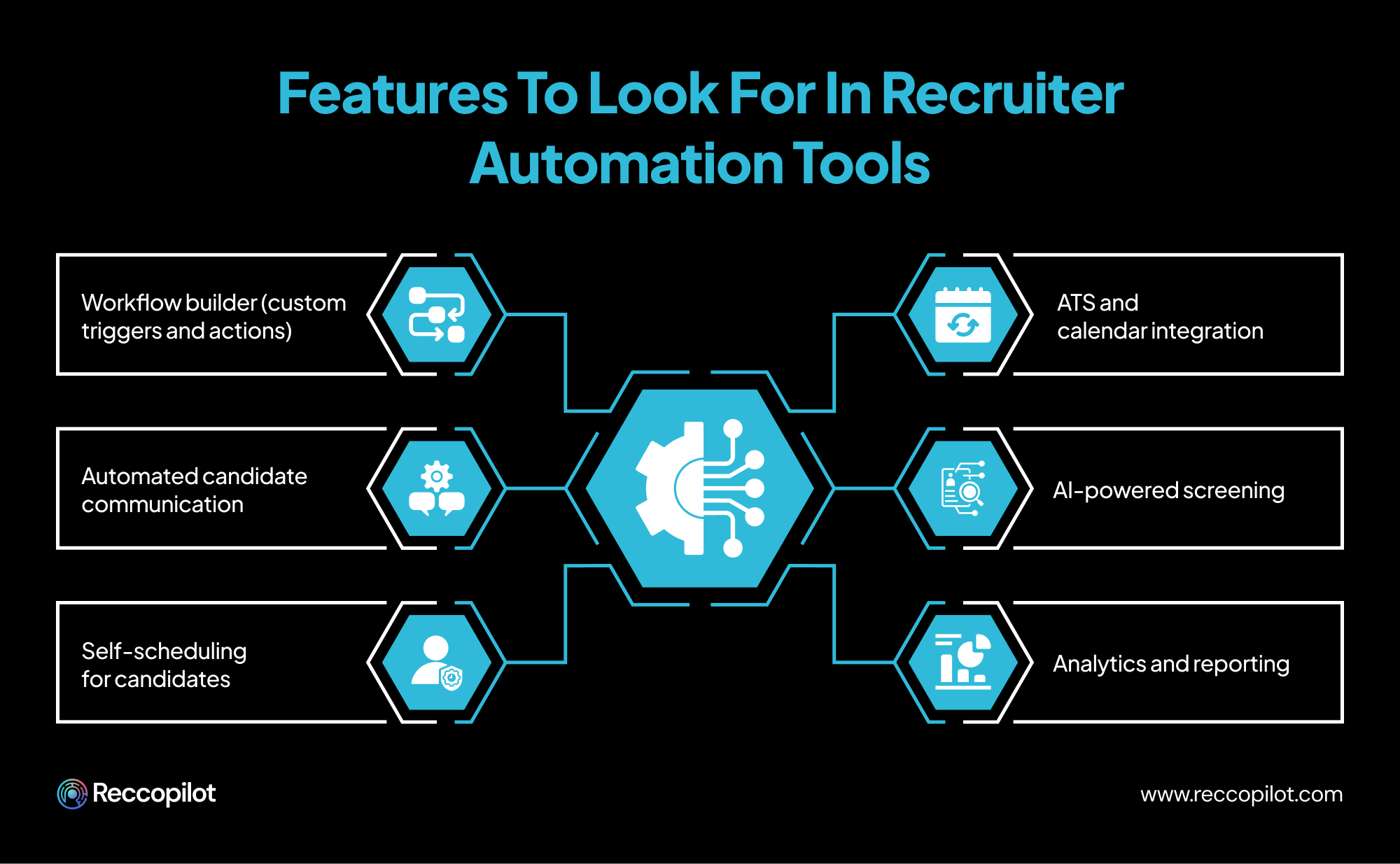
If you're a recruiter dealing with burnout and you're looking for something that actually helps without requiring weeks of setup, Reccopilot is worth looking at. It's built around the idea that recruiters should spend their time on people, not admin work.
Reccopilot handles automated screening, interview scheduling, candidate communication, document collection, and pipeline management all in one place. The AI features help with the parts of recruiting that usually take the most time, like going through large batches of applications or making sure every candidate is getting consistent and timely communication.
Reccopilot offers a free trial so you can actually see how it works with your real hiring process before committing to anything. For teams dealing with high volumes or chronic recruiter burnout, it's a low-risk way to find out how much time automation can genuinely give back.

Beyond tools and systems, there's something else worth saying here. Recruiter burnout is a signal that the recruitment industry needs to take the experience of recruiters more seriously if they want their recruiters to thrive physically and mentally.
There is an expectation from recruiters that they need to be the face of the company to candidates while also managing huge operational workloads in the background they are expected to be Fast, personal, strategic, and organized all at once. Many of them genuinely love what they do, but they're being asked to do it in conditions that make it unsustainable, and that is not good for them as well as the company, because to be honest, it will eventually backfire to the company only.
There are many better tools that help automate recruiting. Wherever possible, steps. Give recruiters better data so they are not guessing. But also listen to what recruiting teams are actually telling you about what makes their work hard. The high-tension pain points in recruitment aren’t secrets. Recruiters can name them clearly; the industry just needs to start addressing them.




