


What Is an AI Document Management System? Benefits, Features & Use Cases
Read Time
10 Minutes
Updated On
July 29, 2026
.jpeg)


Right now, inside your office, a person clicks through folders hunting one piece of paper on screen. Could be an agreement signed half a year back. Or perhaps a bill saved wrong, buried beneath names like "finished_LAST_copy." Research says workers waste hours weekly chasing files they know are there - floating in shared drives or lost in cluttered desktops. Time slips by, not building anything fresh. Only retracing steps.
Funny how long it took for something like this to show up, AI sorting through documents now, finally handling that exact headache.
In this blog we will discuss what AI document management system is, and how it benefits not just recruiters but many different industries. And we will also discuss what are AI document management system features and real use cases as well.
Start anywhere. This tool holds your files, sorts them, moves them when needed. Without human tags or folder guesses piling up, smarts built into the system handle the work quietly. Jump in later. Things are where they should be.
Most times, AI document management system picks up a paper like someone flipping pages at their desk. Instead of skimming, though, it moves quicker, never losing track near paragraph three on page twenty-nine. Not stuck naming things by guesswork, it spots if something is meant to be a lease, a job reference, or internal memo. When looking for a word, it checks how that idea lives across sentences, not just titles with similar letters. Phrasing questions like regular talk usually gets a clear reply straight off, no need to open five folders first.
Picture two things: one just stores papers, the other knows every word on them. The first holds files quietly. Not so the second, it brings back what matters when needed. One sits idle; the other pays attention. You ask, it recalls. It does not just keep data. Knowledge lives inside it.
Folders on old file systems acted like digital drawers. Files went in one by one, sorted by hand every time. Tagging relied on memory, so mismatches crept in easily. Search results matched how carefully someone filed earlier. Truth? That rarely happened smoothly.
One thing changes completely with AI document management tools. Sorting happens without help from people. Key details get pulled, names, dates, numbers, terms - based on what counts for each file kind. Patterns become familiar after repeated use, making guesses about needs grow clearer week by week. Certain systems spot mismatches quietly, a contract line left blank or a bill that disagrees with an order form.
Most of the time, standard document management system wants you to keep things neat. With AI-driven systems, order happens on its own, learning quietly in the background whether you pay attention or not.
Truth is, most chatter on this topic misses the point entirely. What counts isn’t the pitch - it’s how things play out each morning when decisions get made.
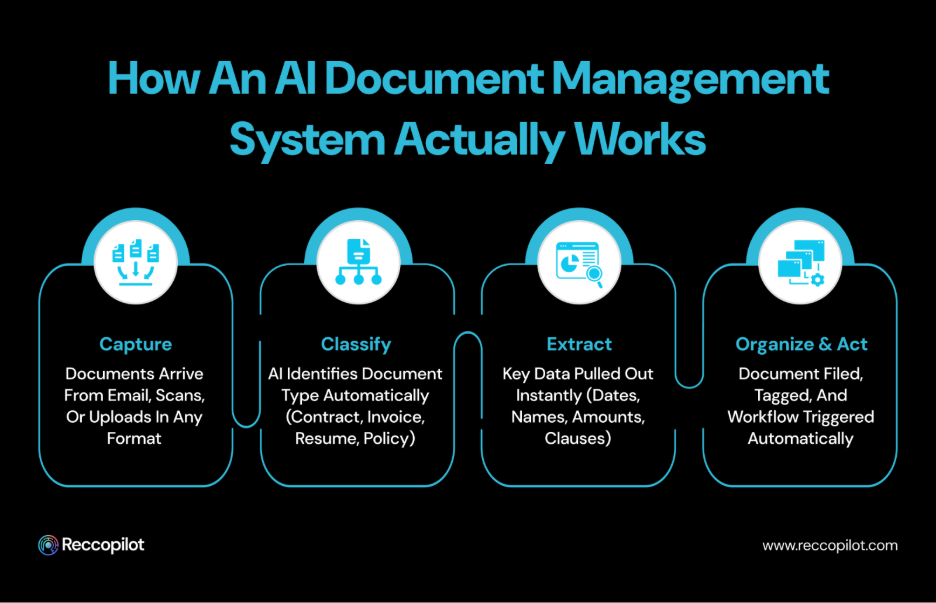
Out of nowhere, documents arrive, by email, scan, upload, any way imaginable. What happens next? The system just knows. Not told, not trained each time - it spots a contract for what it is. Same goes for an expense report. Recognition clicks into place on its own. Hard to believe one feature cuts so much busywork. All that shuffling by hand? Gone before you notice.
What grabs recruiters right away? That smart search tool. No more guessing file names. Try typing "vendor agreements expiring next quarter." Out come the exact documents you need. The software gets what words mean inside files, not just titles stuck on them.
Out of papers comes useful bits, pulled by machines, no fingers on keyboards needed. Totals from bills? Dates in contracts? Personal worker info? That resume? All grabbed cleanly. That extracted piece moves into different software when told. Done before you’d finish copying one page.
Things stay organized because each update gets logged automatically. Say goodbye to messy names like final_v2_USE_THIS_ONE forever. Anyone can see exactly who changed which part and at what time. Mistakes? Just step backward to an earlier point without stress.
Most recruiter overlook how files are locked down until something slips. Documents that carry weight - think payroll or personal records, get spotted by the system before they’re shared wrong. Instead of waiting for someone to make a move, the software steps in quietly. Protection kicks in because of what’s inside the file, not where you put it. Folder labels don’t fool anyone anymore. Real control comes from reading between the lines, literally.
Once a document gets approval, things just happen. When an invoice clears, it slips straight into payment queue. Contracts, once signed, tap the right folks on the shoulder. Steps follow without nudging. The system keeps moving, no reminders needed.
Alone, each piece seems plain. Yet when combined, they form something steady - working without noise, needing little attention.
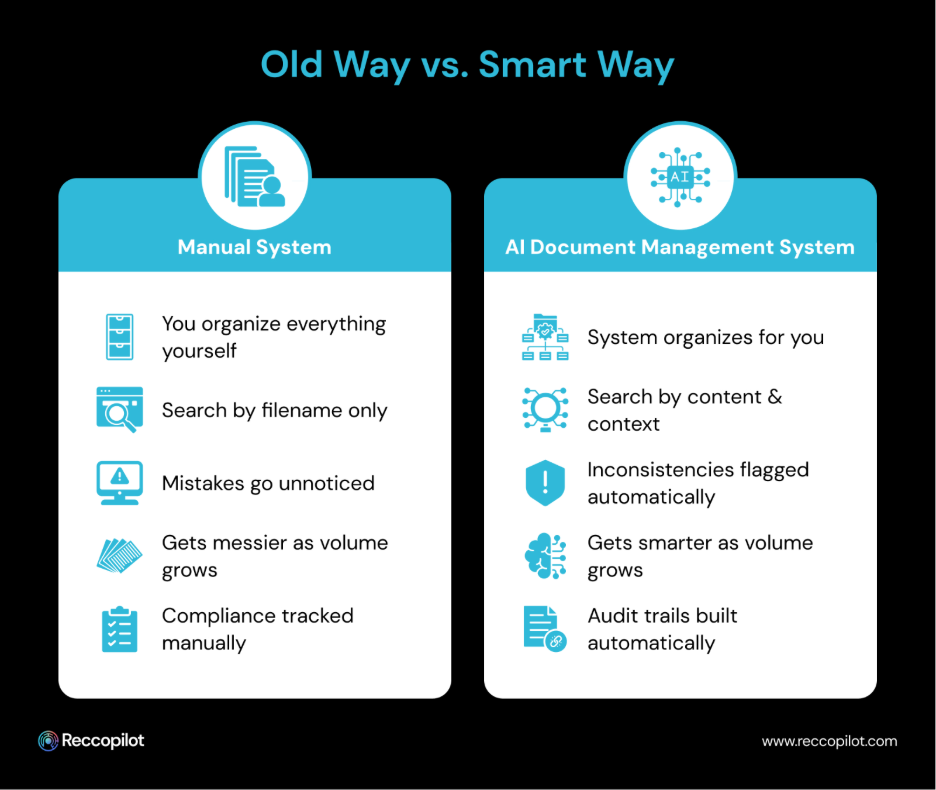
This is when theory fades out, real experience steps in. Suddenly, the abstract hits home during routine tasks. Not a concept anymore, something tangible surfaces in daily effort.
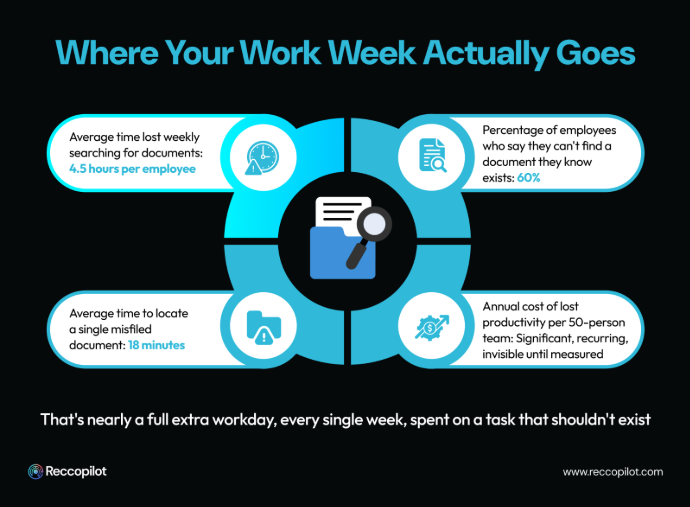
Here it is - the main thing. Those hours once lost to hunting down files, putting them away, then doing it again now go toward real tasks instead. Spread that shift over an entire team and the total jumps up quick.
Errors that cost money happen more than people admit. Left unchecked, small oversights pile up - forgotten renewals, double-handled invoices, misplaced files vanish when needed most. Systems that run checks automatically stop many issues early, often before anyone even notices something was wrong.
Working right feels easier now. Places that must keep tight records find real help without pushing harder. When questions come, proof already exists because tracking runs on its own. Rebuilding everything later takes far more time than having it ready before anyone knocks.
Working together feels lighter when all files live in one smart setup. Since nobody digs through separate folder jungles or lost email chains, less slips away unnoticed. With just a single source active at any time, outdated copies stop causing mix-ups. Versions stay clean because only one exists, no guessing needed.
When things grow, it holds together. Handling half a million files turns messy if done by hand - what worked neatly before now clogs up. Machines powered by artificial intelligence simply keep going, no matter the load. More information flows in, they adapt instead of dragging behind.
Physical space fades away, digital copies pile up slower, workers spend fewer hours managing files. Numbers grow quietly, hiding just beneath daily routines, until the numbers show clear proof on a printed report.
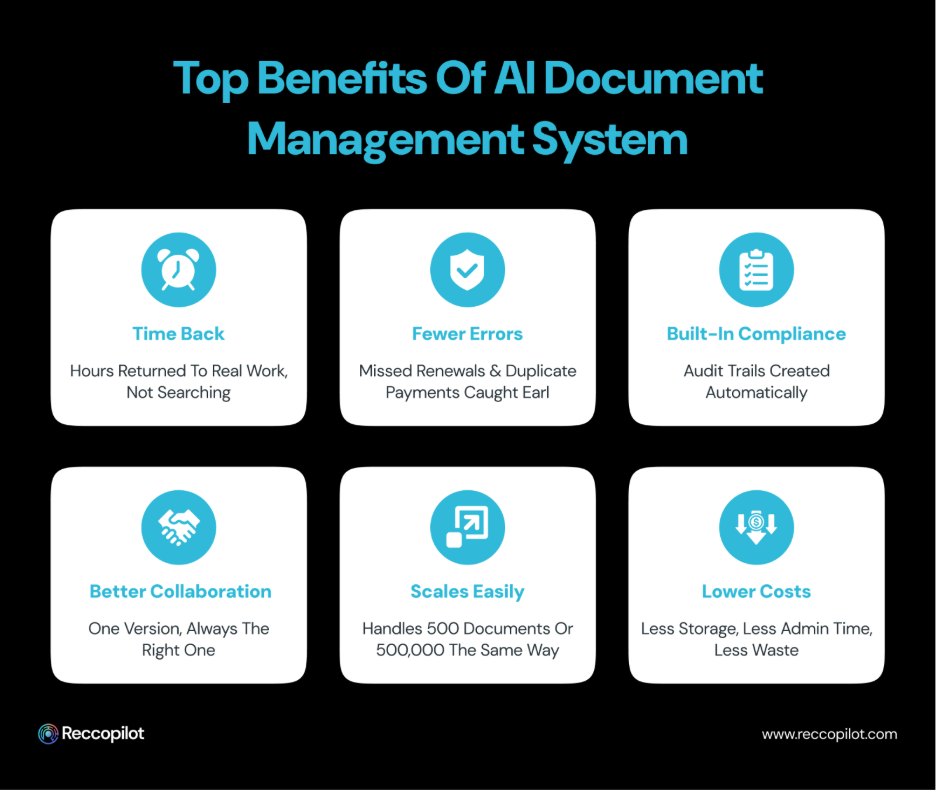
Start with a real example instead of staying vague.
Every day, recruitment departments face piles of papers - resumes arriving nonstop, contracts needing updates, policies shifting, rules changing. Instead of people flipping through files each season, smart software organizes new job applications on its own. Expiring credentials? The system spots them before they lapse. Employee records stay clean, neat, prepared - for inspections, for questions, for whatever comes next.
Fridays can blur details, yet software spots mismatches in invoices, purchase orders, because focus fades after hours of review. Machines compare entries without fatigue, where people may overlook errors buried in expense reports.
Midnight oil burns because contracts demand attention. Spotting expiry dates rests on clear records - who agreed, what changed, stays front of mind. Current versions matter, nothing else fills that role. Machines watching these details kill certain dangers before they start.
Most small groups gain simply by keeping track. Honestly, that’s the core of handling files - never misplacing them again.
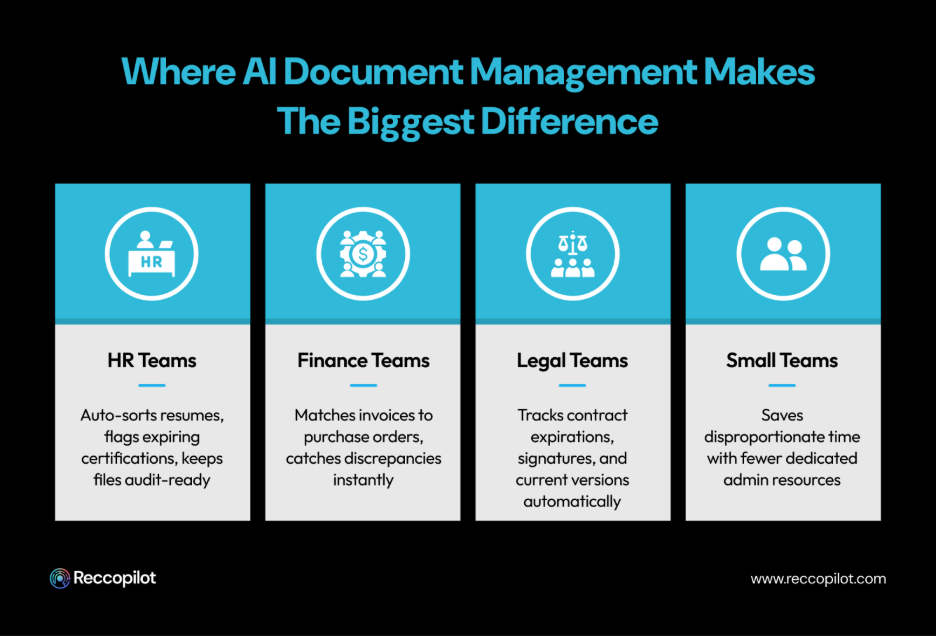
Most talk stays abstract until you test it. See what happens when different fields put ideas into practice.
Some fields look nothing alike. Still, piles of paperwork show up everywhere. When time runs short, machines handle it faster. Paper trails vanish quicker when software takes over.
Truth be told, give it a go before locking in. For something like this, descriptions fall short fast. Take Reccopilot, its free trial pushes your actual files into motion, testing search, sorting, and automated steps under real pressure, not some polished preview. Nothing beats watching it work live; twenty focused minutes expose what endless specs never could.
Truth hits hard when you're digging through folders named "Final_Final_v3." It's not that old ways fail completely - they just drain minutes here, errors there, piling up unseen. Switching tools makes those leaks obvious, sudden. Realizing how much slipped under the radar? That’s what changes everything.
Humans still decide what papers mean, even if machines handle the boring bits. Machines skip the repetitive work people never had to do anyway. What counts is seeing that difference clearly. Value hides right there, inside that gap.




