


What Is a Job Posting: Types, Examples and Best Practices
Read Time
7 Minutes
Updated On
April 21, 2026
.jpeg)



We watched a company struggle for three months to fill a software engineer role last year. They had the budget, the team was great, and the work was interesting. So what went wrong?
Their job posting was terrible. Vague title. Generic responsibilities. No salary range. Posted only on their careers page where nobody looked.
Meanwhile, another company filled the same role in two weeks. Better job posting. Clear requirements. Posted everywhere. Included salary.
Job postings aren't just announcements. They're marketing documents that either attract the right candidates or push them away. This blog breaks down everything about job postings in simple, practical terms.
A job posting is a public announcement that your company has an open position and is accepting applications. Think of it as an advertisement for your job.
The job posting meaning goes beyond just listing an opening. It serves multiple purposes. It attracts qualified candidates, filters out unqualified applicants, builds your employer brand, and sets expectations about the role.
A good job posting answers every candidate's questions. What's the job? What will I do? What do I need? Where is it? How much does it pay? Why should I care?
Define job posting in the simplest terms: it's how you tell the world you're hiring and convince the right people to apply.
People confuse these all the time. They're related but different.
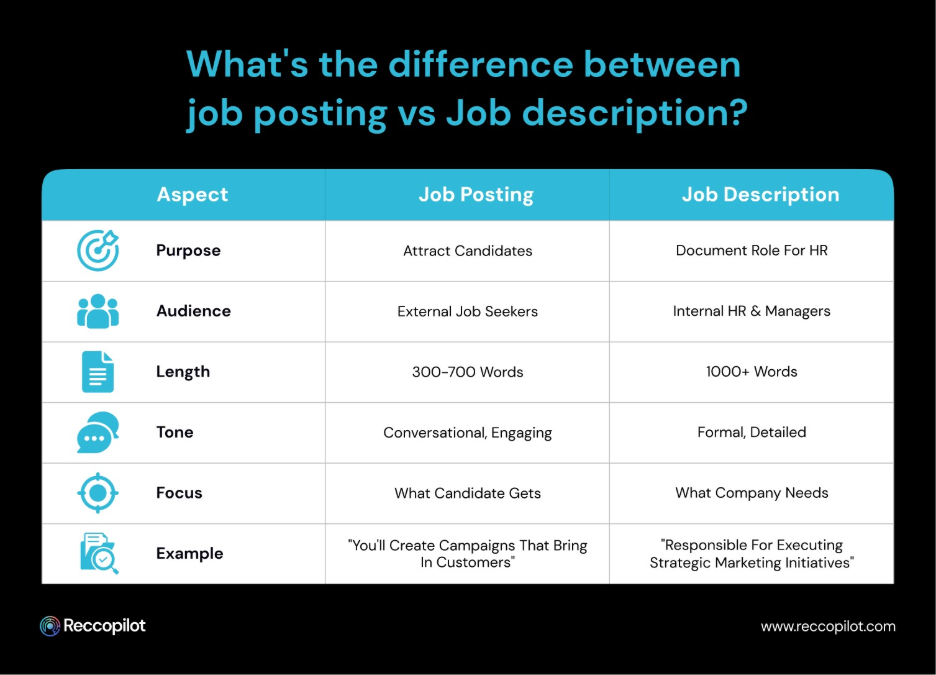
A job description is an internal document. It's detailed, technical, and comprehensive. It lists every responsibility for HR records, performance reviews, and legal compliance. Job descriptions are long, formal, and full of corporate language.
A job posting is an external marketing document. It's concise, engaging, and candidate focused. It highlights the most appealing parts of the role. Job postings are shorter and designed to persuade people to apply.
Here's the difference in practice. Job description says "Responsible for executing strategic marketing initiatives across digital channels." Job posting says "You'll create marketing campaigns using social media, email, and ads."
Use your job description as source material. Transform it into a job posting that actual humans want to read.
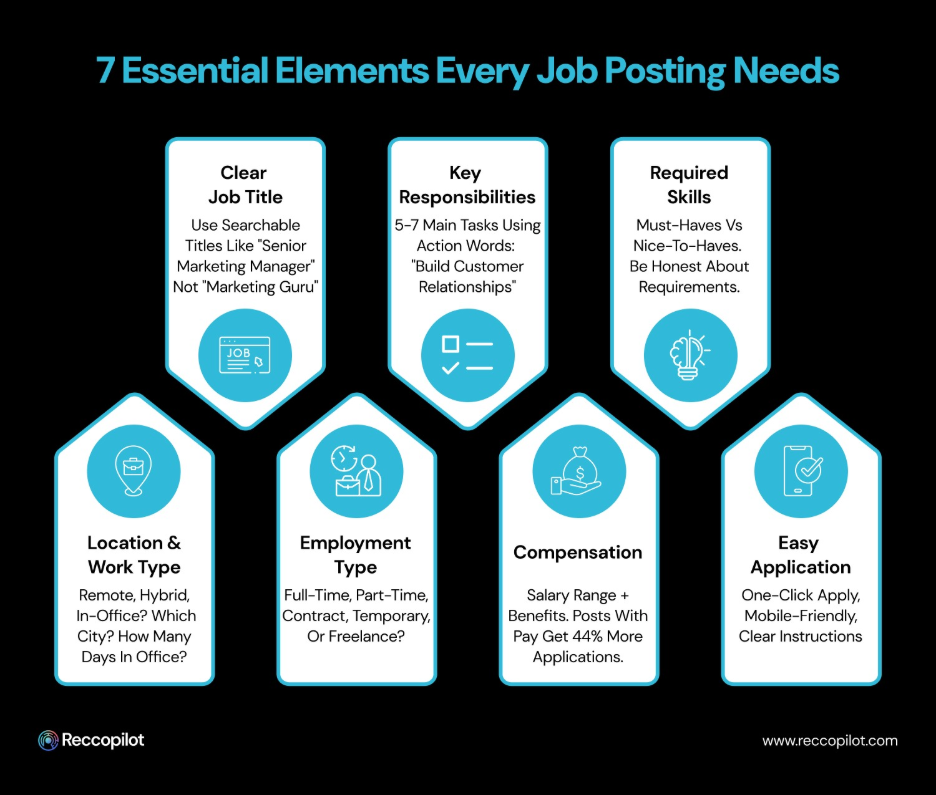
Understanding what makes a complete job posting helps you create ones that actually work. Every effective job posting needs certain key components to attract qualified candidates and give them the information they need to decide whether to apply. Missing even one of these elements can significantly reduce your application rates or attract the wrong candidates. Here are the essential elements every job posting must include.
Job postings come in different types based on who can apply.
Many companies do both. Post internally first for a week. If no good internal candidates, post externally.
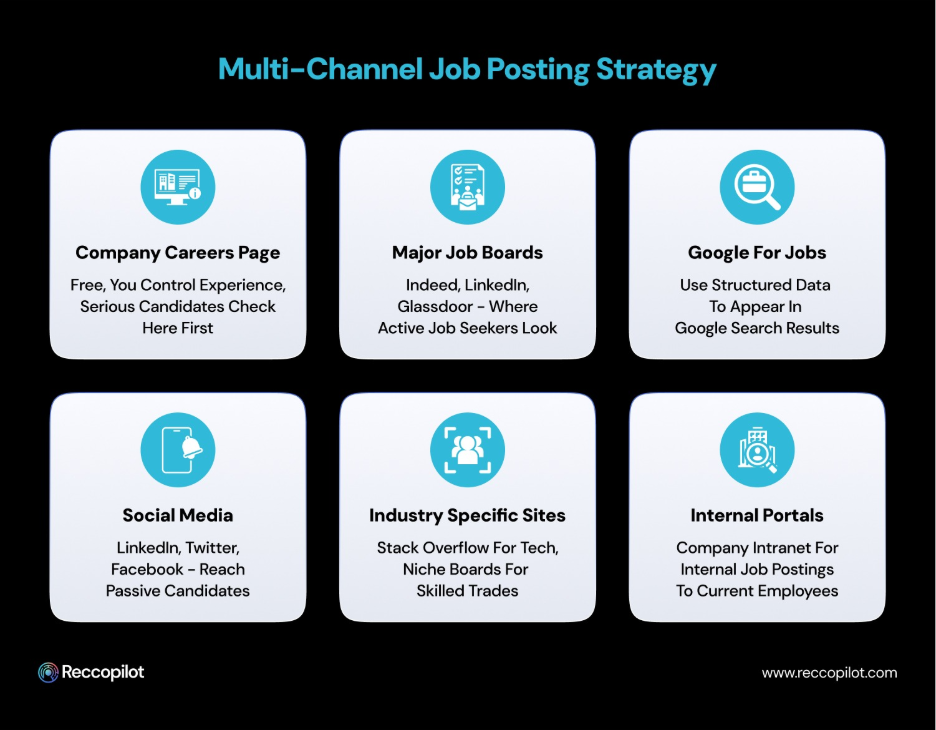
Knowing where to publish your job postings is just as important as writing them well. Different channels reach different types of candidates, and the most successful hiring teams use a multi channel approach to maximize visibility. Here are the key platforms where you should be posting to reach both active job seekers and passive candidates.
Job postings directly affect how fast you hire and who applies.
Well written job postings attract better candidates. When you're clear about requirements and sell the opportunity well, qualified people apply. Vague postings attract random applications.
Good job postings fill roles faster. Clear requirements mean fewer unqualified applications to screen. Appealing opportunities get more qualified applicants quickly. Right channels reach active job seekers.
We've seen companies cut time to hire by 40% just by improving job postings. Same roles, better communication.
Poor job postings waste time. You screen hundreds of wrong people. You repost because nobody good applied. Weeks turn into months.
Even experienced recruiters make avoidable mistakes that kill applications from qualified candidates. These errors typically stem from writing for the company instead of the candidate, or trying to sound overly professional instead of being clear. Let's look at the most common mistakes that hurt your application rates and how to avoid them.
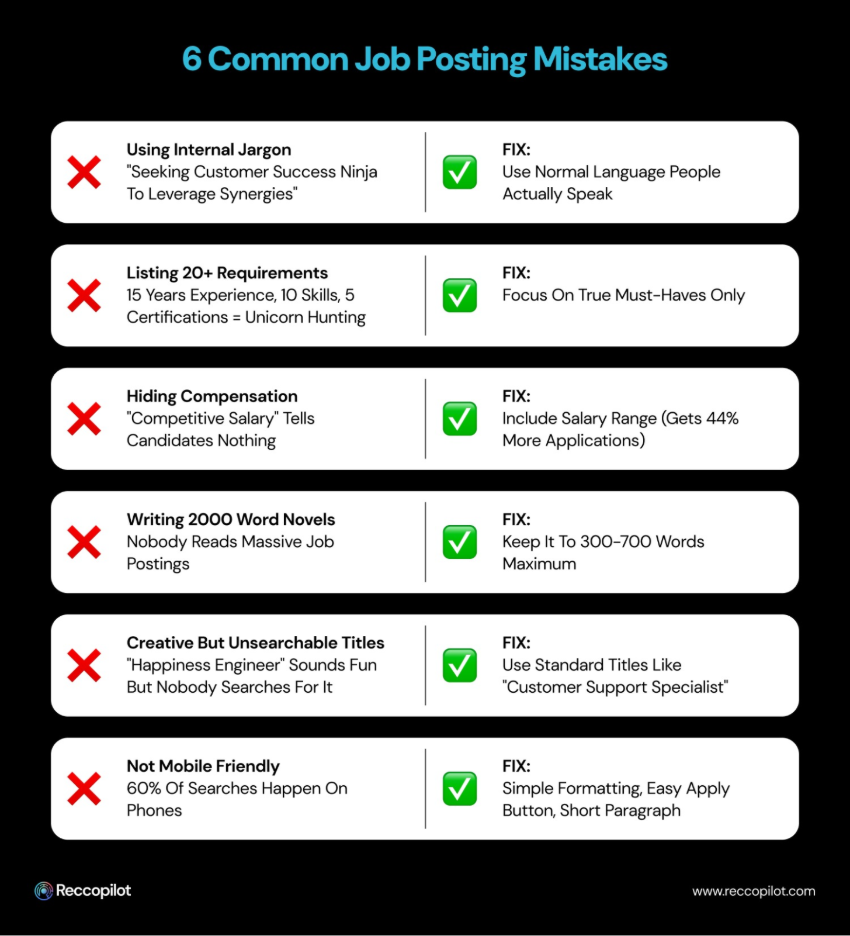
"Seeking customer success ninja to leverage synergies." Nobody talks like this. Use normal language.
20 required skills, 15 years experience. You're scaring away good candidates who have most of what you need.
"Competitive salary" means nothing. Posts with salary ranges get 44% more applications.
If your posting is 2000 words, nobody reads it. Keep it to 300 to 700 words.
"Happiness Engineer" sounds cute but nobody searches for it. Use standard titles like "Customer Support Specialist."
60% of job searches happen on phones. Keep formatting simple and make the apply button easy to tap.
Artificial intelligence is fundamentally transforming how companies approach job postings in 2026. What used to take hours of manual work now happens in minutes with better results. AI doesn't just speed up the process, it improves quality, distribution, and matching. Here's how AI is making job postings smarter and more effective.
AI tools now help write better job postings faster. You input basic information and AI suggests optimized language, identifies missing elements, and recommends better titles. This gives you a great first draft in minutes.
AI analyzes which job postings perform best. It suggests changes to improve application rates and tests different versions to see what works.
AI handles posting jobs across multiple platforms automatically. You create one posting and AI adapts it for different channels and posts everywhere simultaneously.
Reccopilot brings all these AI capabilities together in one platform. The AI helps you create compelling postings, distributes them across channels, and matches them to qualified candidates automatically. Want to see how it works? Reccopilot offers a free trial so you can create and post jobs using AI assistance.

Job postings are growing from static text into dynamic tools that adapt and improve continuously.
Job postings now personalize based on who's viewing them. They update automatically based on market data. Video and voice are becoming normal as some companies include video explanations from hiring managers.
The companies winning at hiring use AI to optimize postings, distribute them smartly, and improve based on data. They spend less time on mechanics and more time making roles genuinely appealing.
Job postings will always matter. But how we create and use them is changing fast. Teams that adapt fill roles faster with better candidates.




