


ATS vs Recruitment CRM: Key Differences and When You Need Both
Read Time
6 Minutes
Updated On
October 18, 2026



A hiring team may have hundreds of candidate profiles yet struggle to find suitable talent when a new position opens. Promising past applicants often go overlooked, forcing recruiters to repeat searches and rebuild relationships.
An Applicant Tracking System (ATS) helps manage applications and move candidates through active hiring stages. A Recruitment CRM (Candidate Relationship Management system) focuses on building talent pipelines and maintaining relationships with potential hires over time.
Although their capabilities increasingly overlap, each serves a distinct purpose. This article explores the key differences between ATS and Recruitment CRM software, how they work together, and when hiring teams can benefit from both.
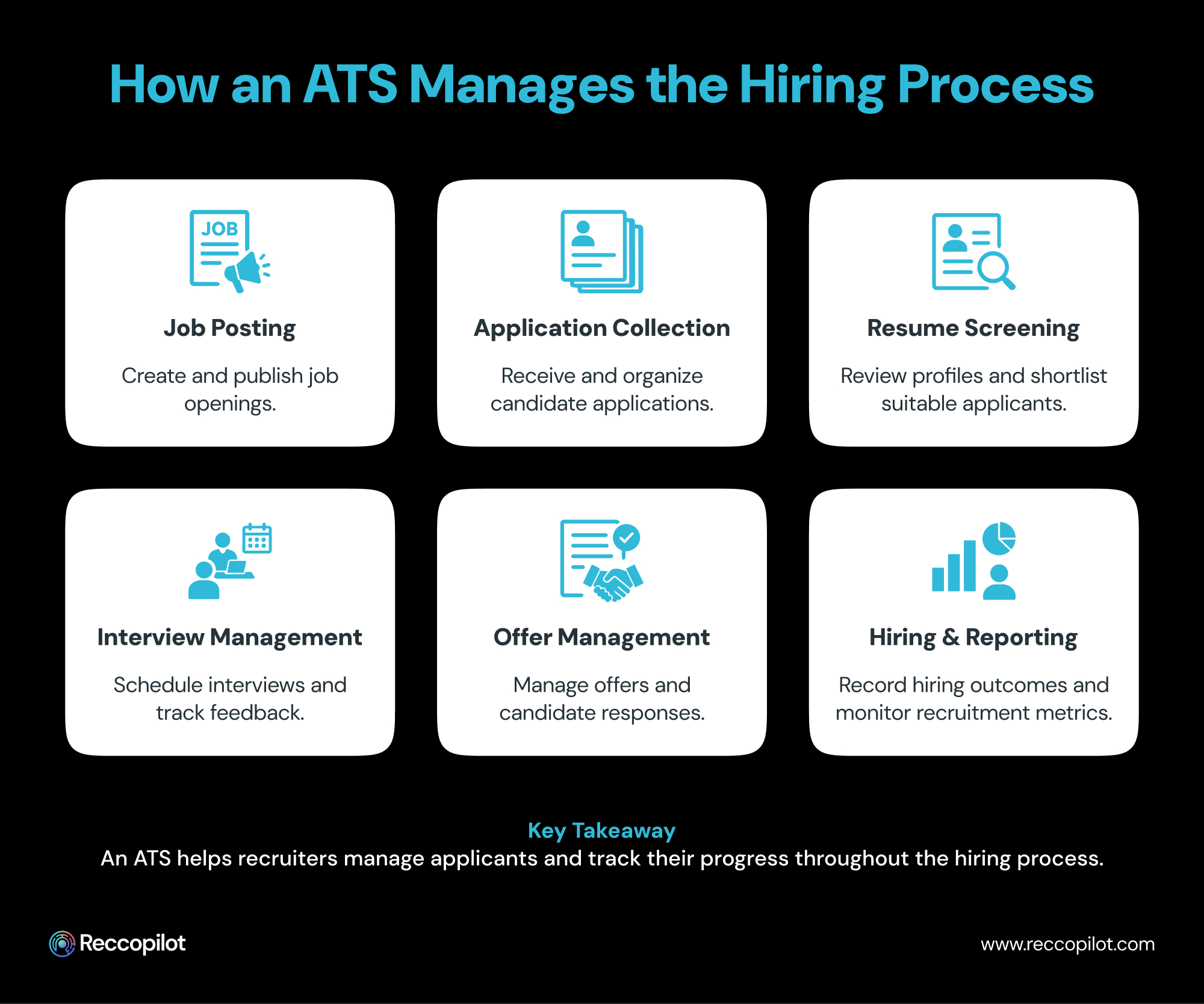
An Applicant Tracking System is recruitment software used to organize applications and manage the hiring process for open roles. Instead of tracking resumes, interview notes, and candidate statuses across spreadsheets and inboxes, recruiters can coordinate these activities in one system.
Common ATS capabilities include:
An ATS is particularly useful when hiring teams need consistent processes, clear ownership, and visibility across active vacancies.
Depending on the product, an ATS may also support resume parsing, standardized evaluation forms, offer approvals, and collaborative feedback. These features help teams document why candidates move forward and identify stages that create delays. Still, an ATS alone may not provide the sustained outreach and relationship-building activities needed to develop a future talent pipeline.
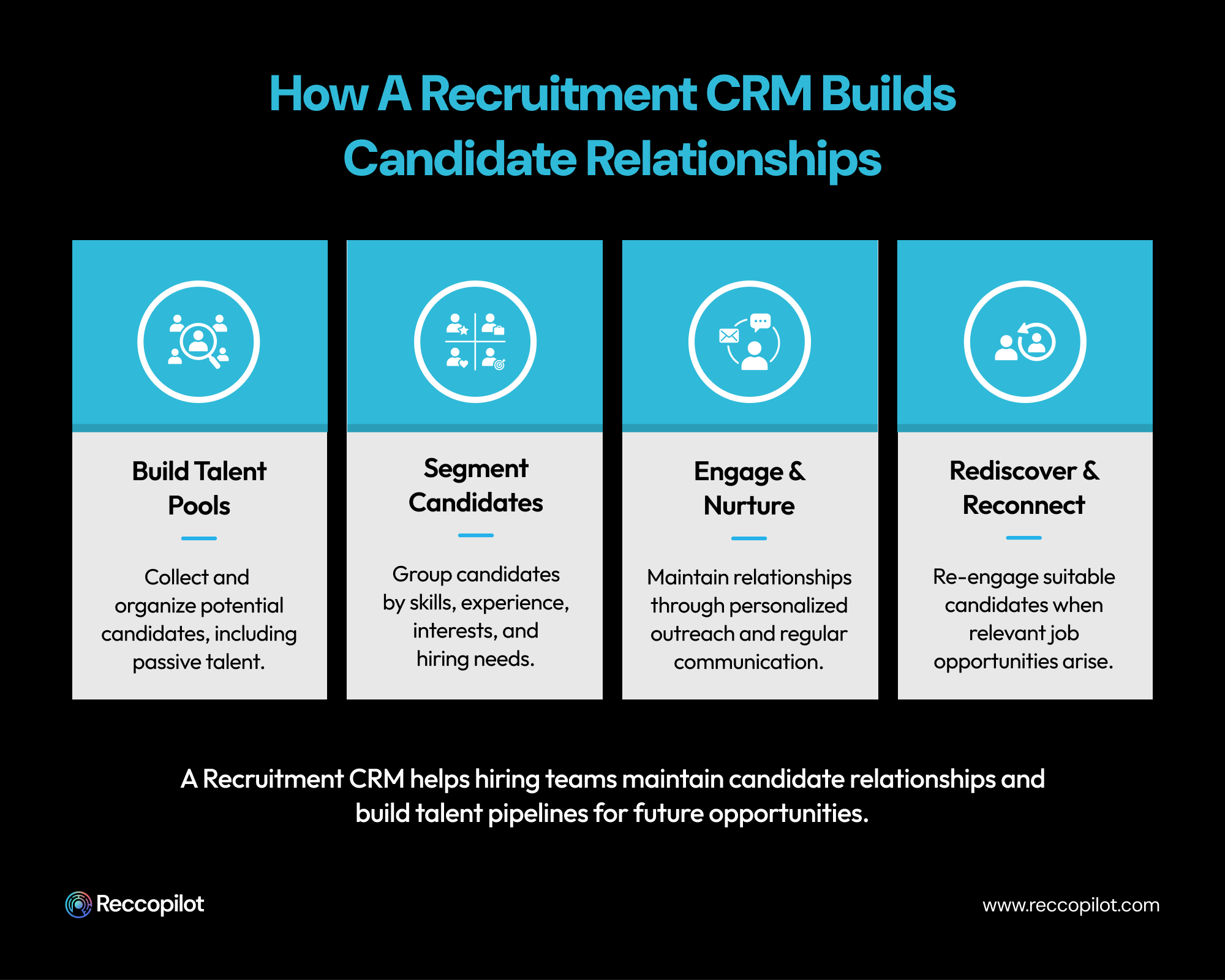
A Recruitment CRM, or Candidate Relationship Management system, helps recruiters develop and maintain connections with potential hires, including people who have not applied for a current opening. Its emphasis is on sustaining talent relationships beyond an individual hiring cycle.
Recruiting CRM capabilities commonly include:
For example, a company hiring specialized engineers can build relationships with qualified professionals before positions become available. When a matching role opens, recruiters already have a relevant talent pipeline to revisit.
A Recruitment CRM is useful when hiring is not tied to an immediate vacancy. For instance, recruiters can segment people by location, experience, or areas of interest and send relevant updates instead of generic messages. Candidate preferences, data accuracy, and appropriate consent matter when maintaining these longer-term relationships.
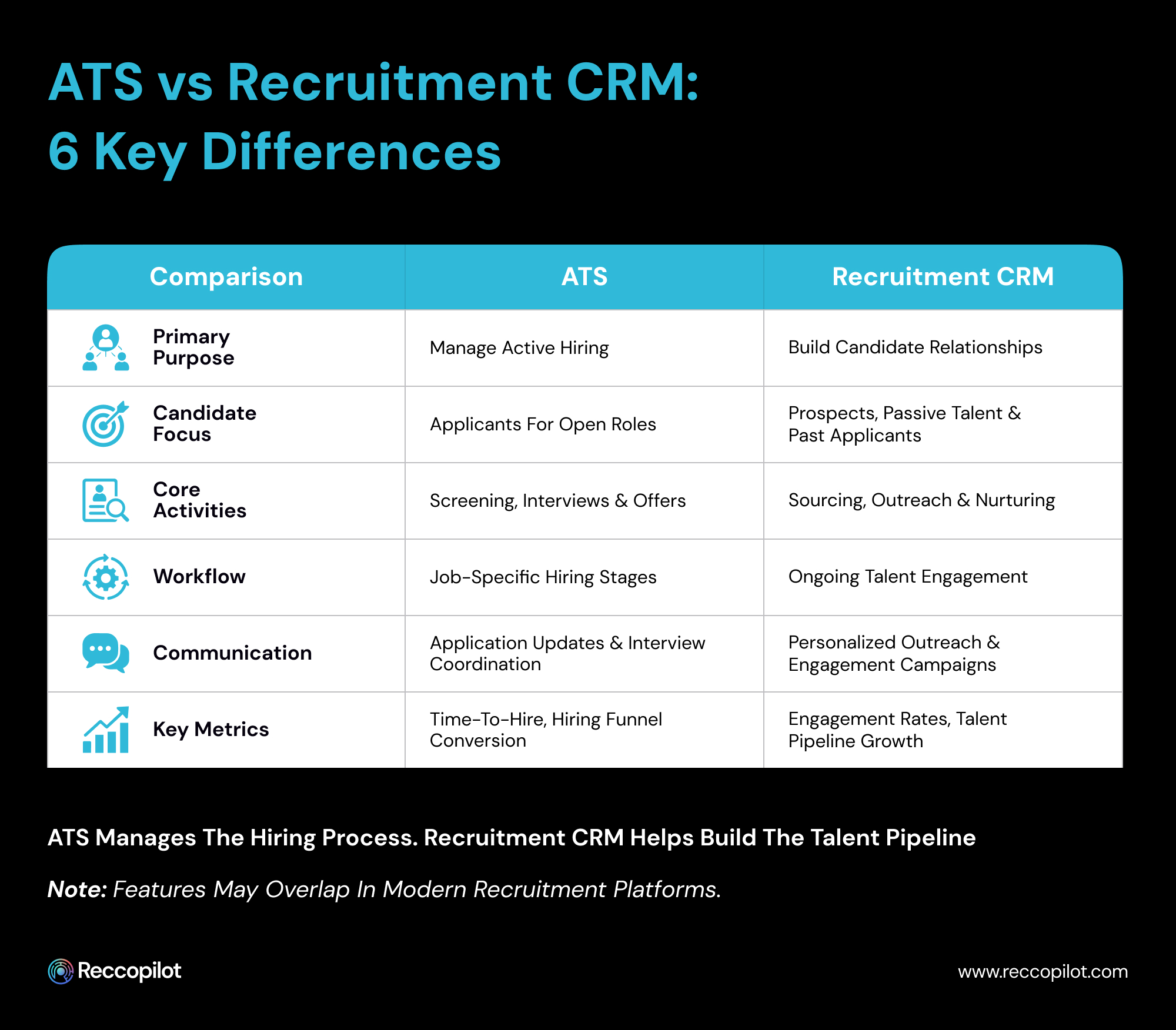
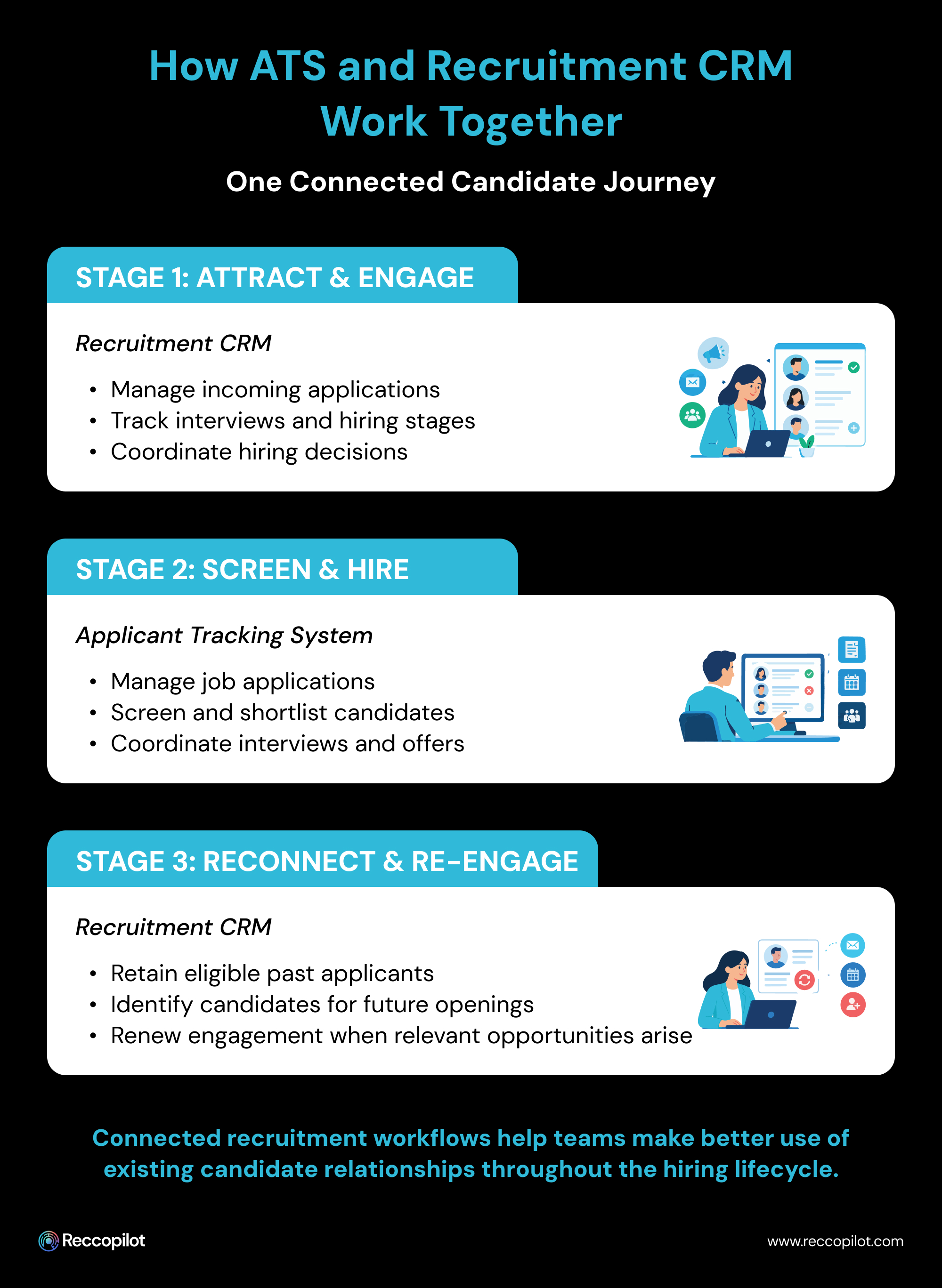
The central difference is purpose: an ATS primarily manages active applications, while a recruitment CRM supports longer-term candidate relationships. Their features may overlap, but the workflows they prioritize are different.
These distinctions are not fixed product boundaries. Many modern ATS products include CRM features, and some recruitment platforms combine both capabilities.
The difference also appears in reporting. ATS analytics commonly examine applications, interview progression, time-to-hire, and offer outcomes. CRM analytics may focus on response rates, engagement, and the strength of talent pools. Reviewing these measures together provides a fuller picture of recruitment effectiveness.
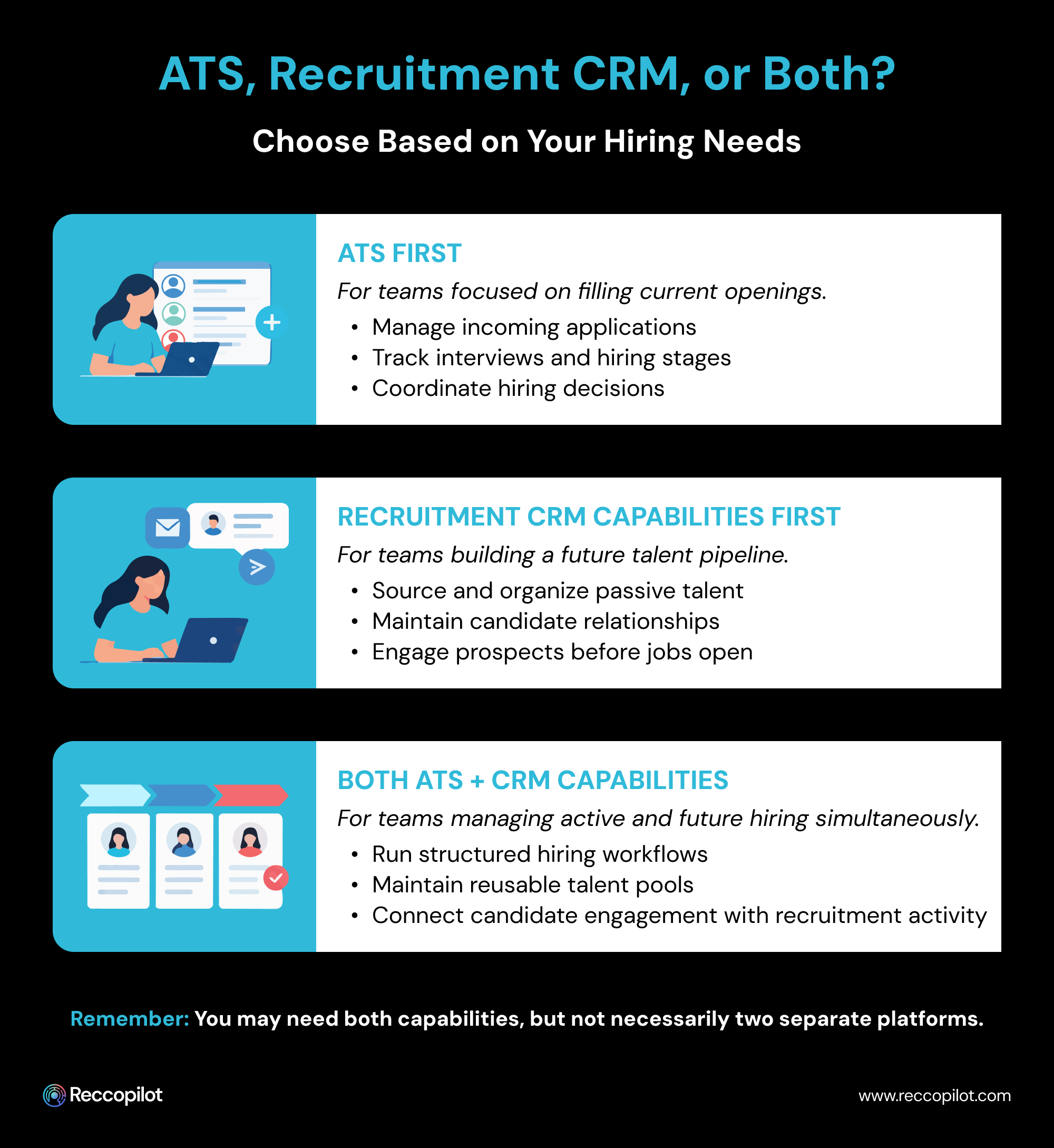
If a smaller organization mainly recruits for current vacancies, an ATS may cover its immediate needs. Application collection, structured screening, interview tracking, and hiring decisions take priority over continuous outreach to passive talent.
A recruiting CRM becomes valuable when a team repeatedly hires for similar roles, searches for specialized skills, or wants to engage prospects before positions open. Staffing agencies and talent acquisition teams managing ongoing pipelines can particularly benefit from segmentation and candidate nurturing.
Organizations handling active applications while continuously developing future pipelines often need both sets of functions. That does not necessarily mean purchasing two products: some platforms offer ATS and CRM in one environment.
A retailer filling seasonal positions may prioritize application tracking for current openings while maintaining relationships with returning applicants. A specialist recruiting agency may place greater emphasis on sourcing and ongoing engagement. In both cases, the decision should reflect the hiring process, not the assumption that every team needs the same technology stack.
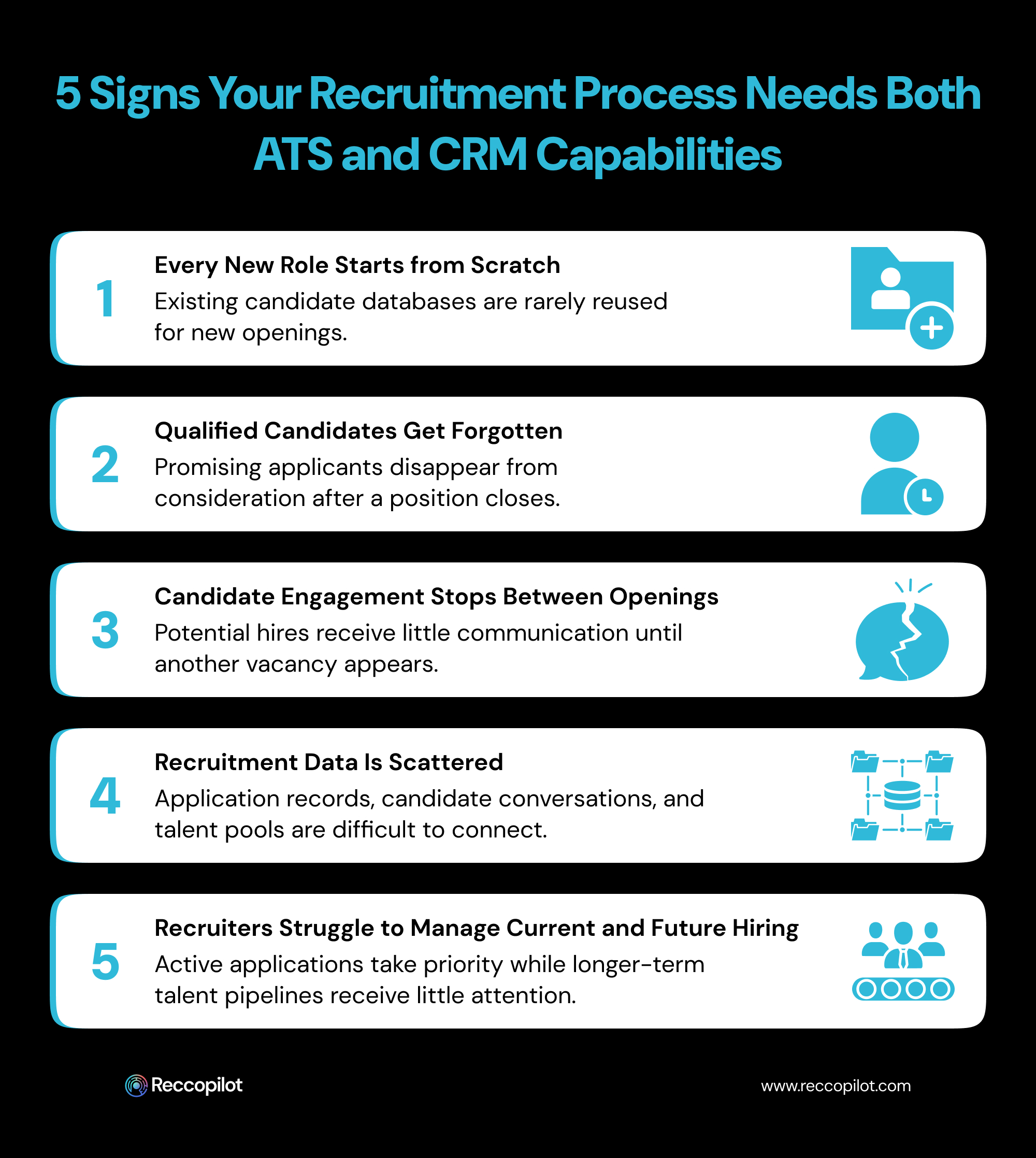
These issues may point to a need for stronger CRM functionality, better ATS integration, or a more connected recruitment platform.
These signs are also useful for evaluating current software. Before investing in another tool, check whether existing features are underused, whether candidate records can be searched effectively, and whether recruiters have an agreed process for following up with eligible past applicants.
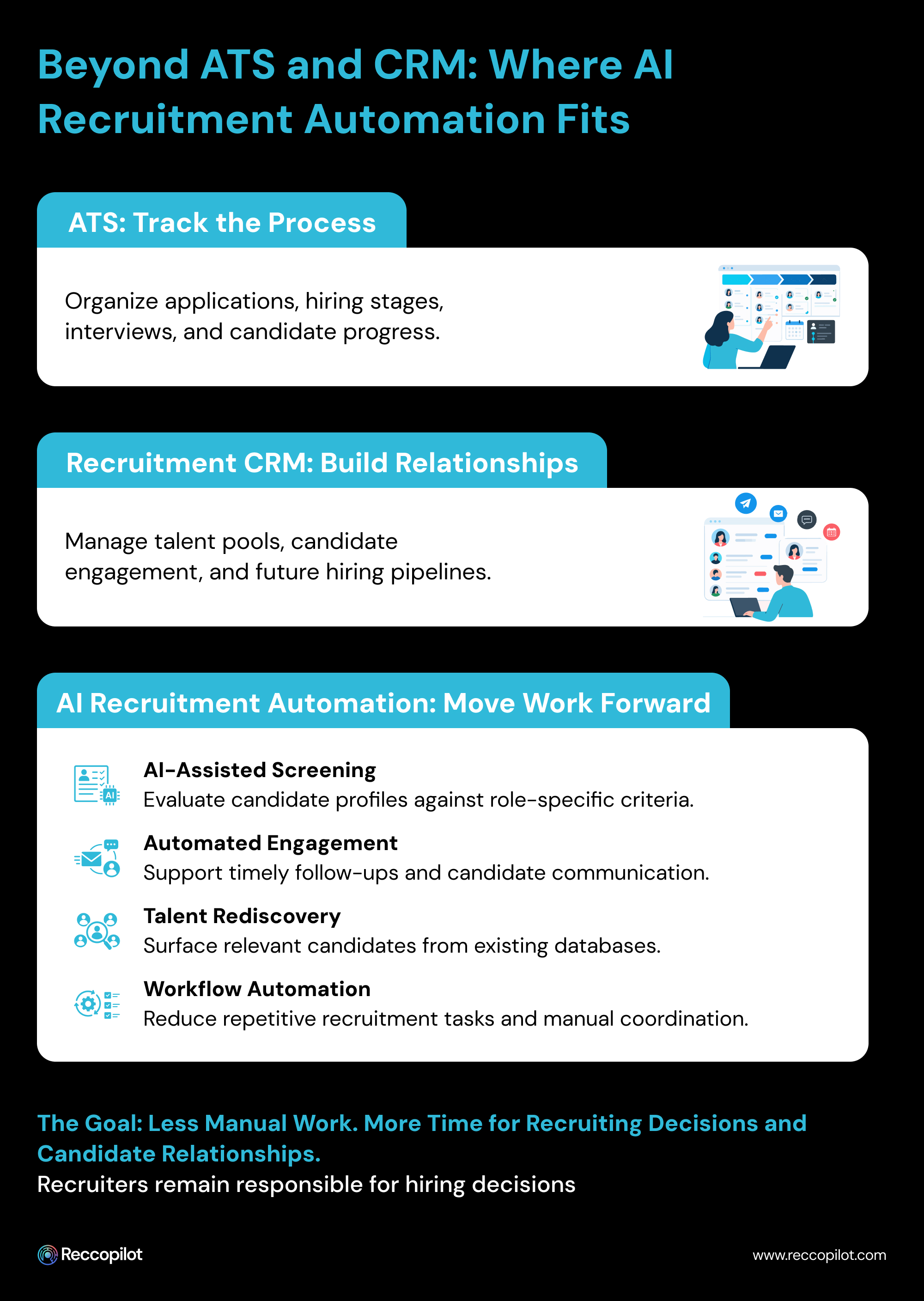
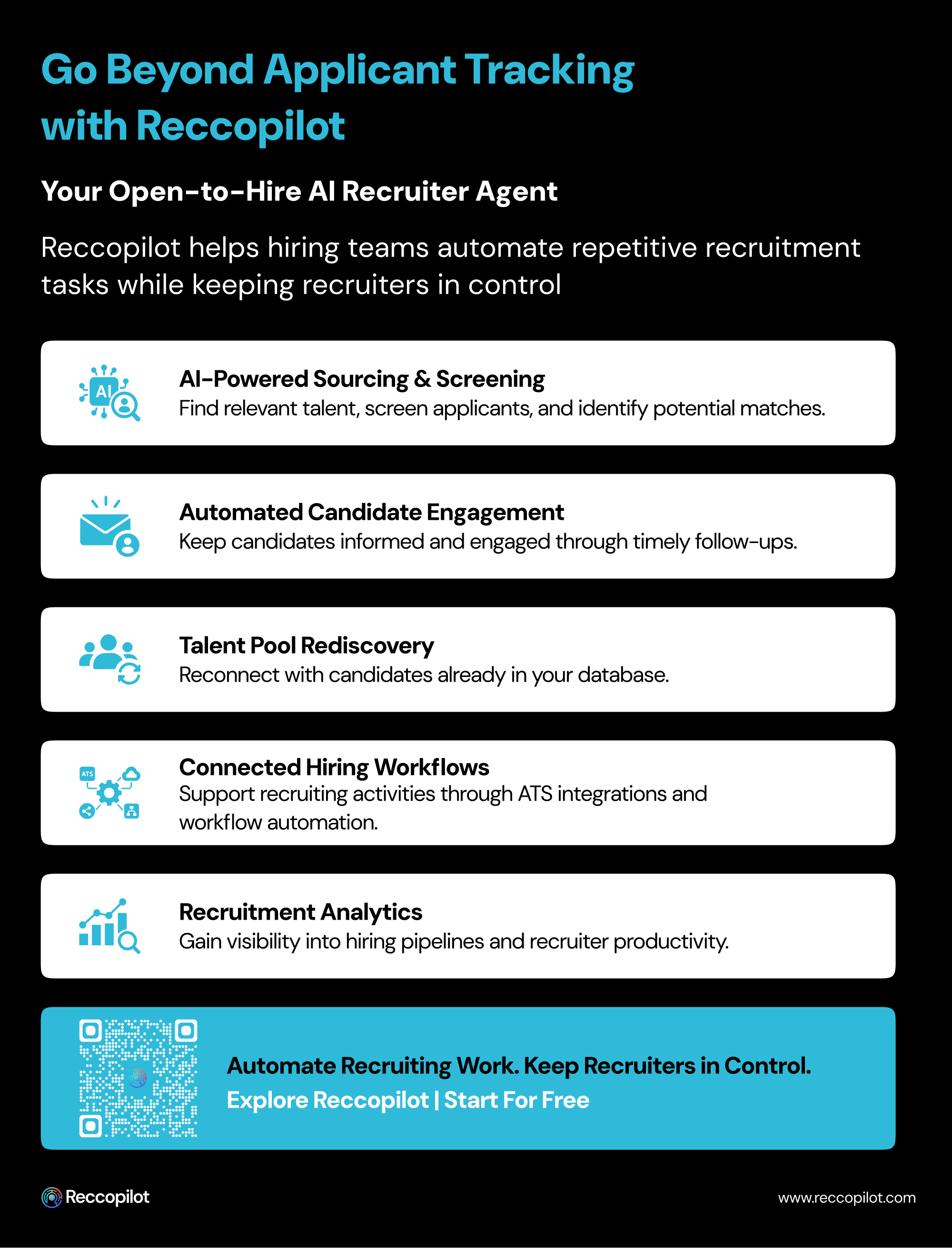
Reccopilot is an AI recruiter agent designed to support hiring activities from job requirements through sourcing, screening, engagement, and hiring coordination. It helps recruiters reduce repetitive tasks without giving up control over candidate evaluation and decisions.
Its capabilities include AI-assisted candidate sourcing and resume screening, role-specific matching, automated candidate communication, talent pool rediscovery, and hiring analytics. Reccopilot also supports ATS connectivity, helping teams introduce automation alongside existing recruitment workflows.
For hiring teams evaluating ATS vs CRM software, Reccopilot illustrates how AI-assisted workflows can complement structured applicant tracking and ongoing candidate engagement.
Explore Reccopilot to learn how an AI recruiter agent can support your hiring process.
In a typical workflow, the team can refine a job requirement, identify potential matches, coordinate screening, and follow up with candidates while monitoring progress. The value is in reducing the manual steps between recruiting activities, not in replacing the hiring team’s judgment. Organizations should assess how these capabilities fit their existing systems and processes.
An ATS helps manage active hiring, while a Recruitment CRM builds and maintains talent relationships for future opportunities. Teams with both immediate and ongoing hiring needs can benefit from combining these capabilities, whether within one platform or across connected systems. AI recruitment automation can further reduce repetitive work and help recruiters make better use of candidate information while retaining human oversight.




